The term “atmospheric river” is familiar to meteorologists and climatologists, but government agencies and policymakers in B.C. were largely unaware of the phenomenon until the recent flooding and mudslide devastation, despite a years-old report highlighting issues around research and awareness. CTV News has obtained a 2014 report, titled “Atmospheric Rivers State of Knowledge Report,” that described an information gap when it came to understanding how they impacted the province in terms of damage and risk of damage, as well as how to better understand potential future impacts.
City of Iqaluit Looks for Workers to Help with Water Distribution
The City of Iqaluit, Canada is hiring temporary workers to help with water distribution as its water emergency enters its seventh week, according to Nunatsiaq News. The city’s water emergency began in October, when people began complaining of a fuel-like smell in their tap water. On 12 October, the city reported fuel, later confirmed to be diesel fuel, had contaminated its water treatment plant. The city and Government of Nunavut declared states of emergency later that day that are still in effect. Volunteers played a significant role in water distribution earlier during the emergency, but support has since waned.
Storm hitting Atlantic Canada 'very similar' to what struck B.C.: meteorologist
“It's a very similar storm,” Bob Robichaud, a senior Environment Canada meteorologist based in Nova Scotia, told CTVNews.ca in a phone interview. “It's the same type of atmospheric setup that would generate this type of rainfall.” He explained that this type of extreme rainfall event, like the one in B.C., occurs when a “very concentrated plume of moisture in the atmosphere that streams up from the tropics” becomes part of a storm.
Throne Speech Outlines Need For 'Guaranteed' Water
Agriculture Minister Ralph Eichler commented on the Manitoba's water management strategy. "We learned fast in regards to how we should be managing water with the drought in several parts of the province last year and how we managed those waters, so that we have a reliable source of good reliable safe water to drink and feed to our livestock as well," he said. "Critically important that we get it right. That's going to be part of our overall water management plan, which we've invested a million dollars in so far." The throne speech also stated that the Manitoba Protein Advantage Strategy will not continue to attract investment unless water is guaranteed for producers and processors.
Lake Manitoba shows off rare ice formations
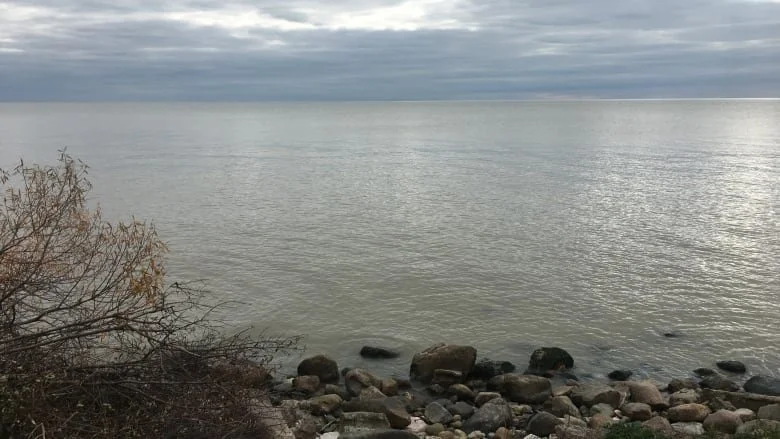
Mother Nature has turned Lake Manitoba into a visual art project that has an ice expert in awe. What would typically be a flat, frozen surface has been turned into something more resembling pebbles and stones, as far as the eye can see. In another area, the water has crystallized into geometric lines that look like someone spilled a box of toothpicks or needles on the ground and they froze there.
Antigonish residents told to stay home after heavy rain causes flooding
Residents of Antigonish, N.S., are being warned to stay home after heavy rains have caused flooding and washed out roads. Main Street is flooded and closed between Court and St. Andrew's streets. Chisholm Park and Columbus Field are also closed due to rising water, as well as the Creighton Lane parking lot. The closures remained in effect Tuesday night. Town spokesperson Kate Gorman said around 8 p.m. that while water levels had receded, they were expected to increase later because of the incoming tide.
Photos show areas in Abbotsford, B.C., at the height of the flood, and as water recedes
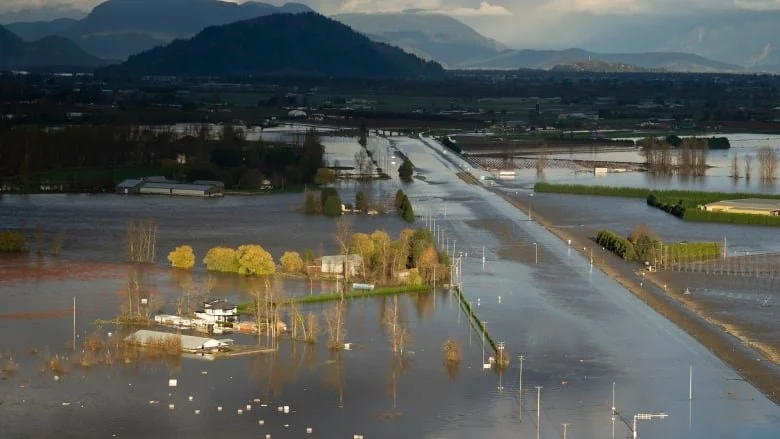
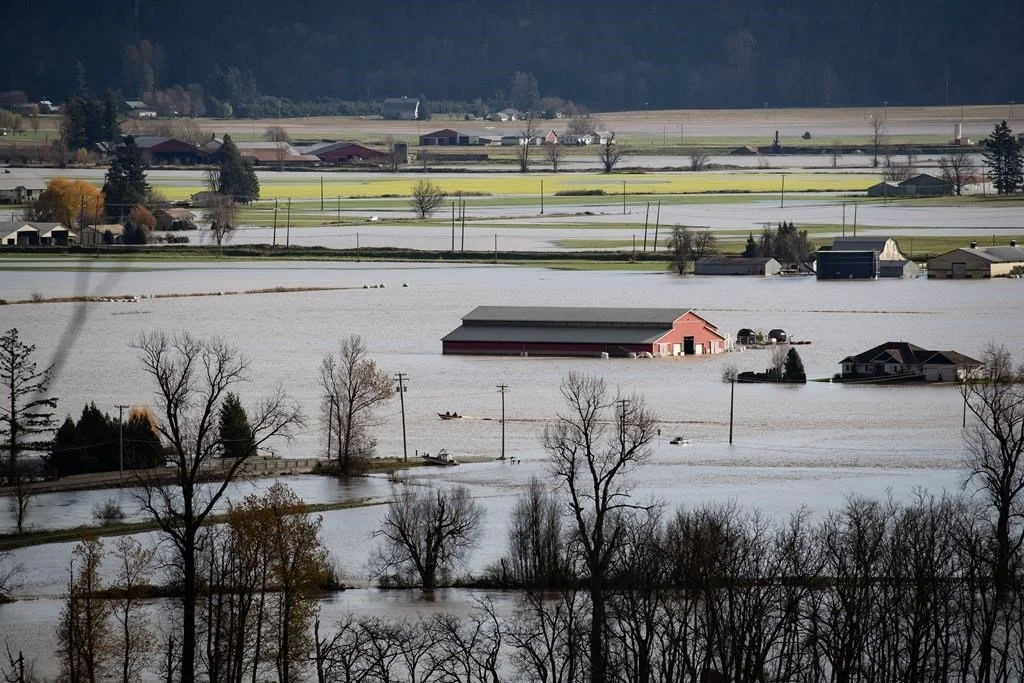
Photos show just how deep the floodwaters were last week following a storm across the southern half of British Columbia. Images captured by The Canadian Press show three areas of Abbotsford, B.C., as they looked underwater, at the height of the flooding in the Fraser Valley city. The same locations were then photographed again as the water receded, showing the dramatic impact of the previous storm.
Construction contaminates well water in area near Montfort Hospital, residents say
If the developer's proposal is approved, residents say they're worried the required deep drilling and excavation could leave their water undrinkable. It's a problem homeowners said they've watched emerge over decades of routine testing. "We seem to be in a kind of Groundhog Day scenario as each development comes up," said Al Crosby, who has lived in Fairhaven since 1978.
B.C. disaster drives home need for flood-resistant infrastructure across Canada, climate experts say
Climate specialists say a major overhaul of infrastructure in communities across Canada is needed to make homes, buildings, roads and rail lines more resilient to extreme weather events, as climate change makes those events more likely. "Infrastructure decisions in Canada are not accounting for a changing climate," said Ryan Ness, research director for adaptation at the Canadian Institute for Climate Choices.
City of Merritt releases return-home plan for flooded-out residents
Some residents of Merritt, B.C., will be returning to their homes this week after the entire city's population was forced to flee due to extreme flooding that caused the complete failure of the municipality's wastewater system last Monday. Relentless rain caused the Coldwater River, which runs through the southern Interior community, to overrun its banks Nov. 15, triggering an evacuation order for all 7,000 residents shortly after 7 a.m.
Before-and-after satellite images show flood devastation in B.C.'s Sumas Prairie
Dramatic satellite images show the extent of flood damage in B.C.'s Sumas Prairie following last weekend's historic rainfall. The low-lying rural area, east of Abbotsford's town centre, is mostly farmland and was created by the draining of Sumas Lake in the 1920s. Last week the area suffered extensive flooding as water gushed in from the Nooksack River from neighbouring Washington state, forcing evacuations and killing livestock.
City of Iqaluit tells residents to have enough water for storm
The City of Iqaluit urged its residents to have enough water on hand to last for 72 hours because of strong winds and heavy snowfall expected to start Monday night and end on Tuesday. “The City is recommending that residents refill water, in the event that the potential incoming storm limits their ability to leave their homes and get to water refilling depots,” Aleksey Cameron, communications manager with the city, said to Nunatsiaq News in an email. Tuesday marks the start of the seventh week that Nunavut’s largest community has been under an order not to consume city tap water, after diesel fuel was detected in the water in October. Many residents have been getting their water from city-run filling stations that provide water purified by the Canadian Armed Forces, who draw water from the Sylvia Grinnell River and run it through their temporary purification system.
Egan: 'The capital of Canada and we're fighting for clean water'
“Each time there’s construction, there’s contamination,” said Crosby, pointing to projects like the Montfort’s expanded parking garage or the new Shepherds of Good Hope building. He counts perhaps 10 spikes in the past 15 years, leading to a need to “shock” his water system with cleansing chemicals. “We shocked it so often that it corroded the fittings on the pressure tank.” Over the years, there have been vibrations strong enough to rattle dishes and knock a connecting pipe off the septic system. “This has always been a concern,” said Parent, a retired public servant. “It raises the spectre of our wells drying out. With all this development, the danger becomes increasingly more serious.”
flypop’s A330 Delivers Bottled Water To Northern Canada
On LinkedIn, flypop CEO Nino Singh Judge posted that the twinjet conducted a mission to Iqaluit amid the crisis the Inuit and Nunavummiut communities are facing there. The problems revolve around housing and clean drinking water. The BBC reports that the area has not had clean water for a month. Notably, a state of emergency was declared on October 12th, and since then, it’s been noted that the water is not even safe after boiling.
Volunteers in Abbotsford help with cleanup as receding floodwaters leave behind trail of garbage, debris
In the days following the catastrophic flooding in the southern part of B.C., including Abbotsford, receding water left behind a trail of garbage and debris in its path. Now, community volunteers are gathering to help with the cleanup. "We weren't affected for our house, but we want to help the community as much as we can," said Melissa Lippmann, who brought her husband and daughter to help pick up trash and litter at a blueberry farm in the area.
Windsor engineer worried about climate change's impact on water quality in the Great Lakes
A Windsor-based engineer said climate change is taking a toll on the health of the Great Lakes and this could in turn have an impact on the quality of drinking water for millions of people. Saad Jasim, who is also president of the International Ozone Association, said the impact of climate change on the Great Lakes is quite visible in the form of harmful algal blooms. "But it's not just the way it looks, these algal blooms produce some fatal toxins … there are different species of those toxins [and] unfortunately only one of the species is regulated by Health Canada," Jasim told CBC Windsor.
Cost of damage from B.C. flooding could be 'catastrophic,' expert says
"We are considering this to be a catastrophic loss," Rob de Pruis, director of consumer and industry relations at the Insurance Bureau of Canada, told CTV National News. Floods in both Toronto and Calgary in 2013 prompted the Canadian insurance industry to offer what it called "overland flood coverage" starting in 2015. The Insurance Bureau of Canada estimates about 50 per cent of B.C. property owners have purchased it. "We do know and we have received reports of overland flood damage, sewer backups, even wind damage," de Pruis told CTV News Vancouver. "If you have been evacuated and you do have the overland flood coverage, you also have coverage for your additional living expenses."
Helicopters drop drinking water at flooded B.C. farms
Karl Meier has spent days battling to save his property and dairy cattle from flooding in British Columbia's Fraser Valley, but he says the biggest issue right now is with local law enforcement. "It was bad enough we had to fight the water, but now we've got to fight someone against what we're trying to do," said Meier. Meier owns U & D Meier Dairy in the Sumas Prairie region of Abbotsford, about 100 kilometres east of Vancouver. The area is under an evacuation order because of flooding in the nearby Sumas River. Police-enforced roadblocks have been set up around the area to prevent people from coming or going. Meier said this is making it difficult for people to bring in supplies to the farmers who have chosen to stay to protect their business and their animals.
Historically low water level on Bow River concerning, water scientist says
If it seems like the water level on the Bow River is lower than normal this winter, you're right, and the possible implications could be serious, says a top water scientist. The Bow River's flow level is in the lowest quarter of all observations in the 125 years that the Water Survey of Canada has measured the river, according to researcher John Pomeroy, who is based in Canmore, Alta. He is the Canada Research Chair in Water Resources and Climate Change at the University of Saskatchewan.
This First Nation is just 20 km from downtown Prince George — but they still can't drink their water
Kym Gouchie lives just 20 kilometers away from downtown Prince George, northern B.C.'s largest city and one that has been rated as having one of the best water systems in the country — but because she is on reserve land, she has been unable to drink from her taps for more than a year. Gouchie lives with her mother on the Lheidli T'enneh First Nation reserve, which was established after its members were removed from the Lheidli T'enneh village near present-day downtown Prince George in 1913. In 2019, the First Nation announced the installation of water filtration systems, which have since failed.