Abbotsford water pump an 'example' of broader climate change infrastructure issues: experts

Abbotsford water pump an 'example' of broader climate change infrastructure issues: experts

Four massive water pumps working to keep a low-lying community in British Columbia from devastating floods is shining a light on a larger, Canada-wide issue. Experts say infrastructure across the Canada was not built to withstand the impacts of climate change and the increasing severity of extreme weather events. On Wednesday, Mayor of Abbotsford, B.C. Henry Braun told a news conference that the Barrowtown Pump Station which is struggling to keep Sumas Prairie from completely flooding was working at “maximum capacity.”

Federal assistance arrives in B.C. as province starts rebuilding from floods

Federal assistance arrives in B.C. as province starts rebuilding from floods

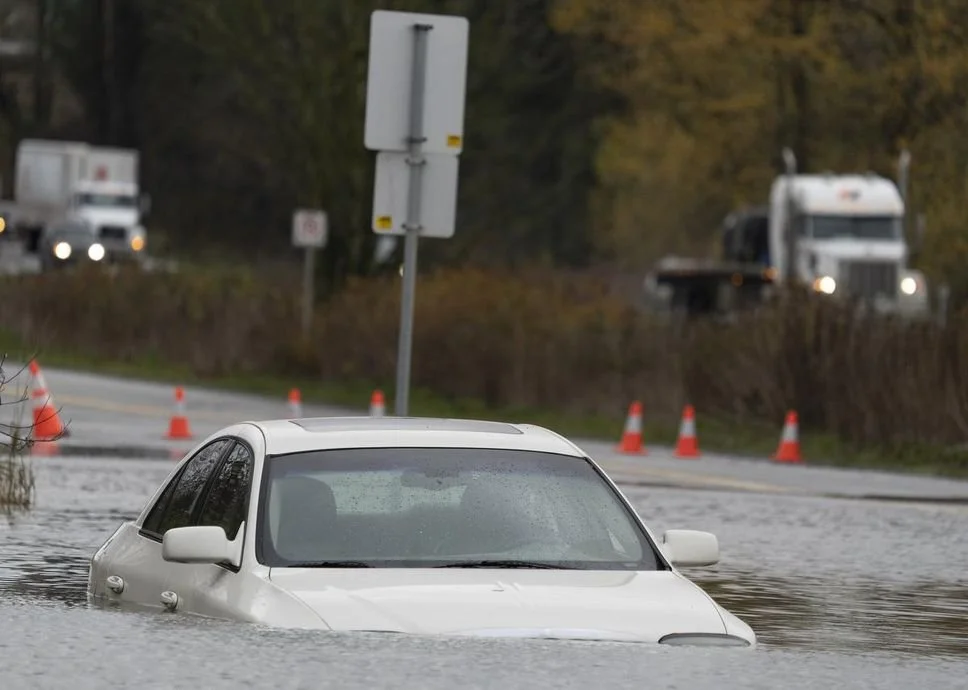
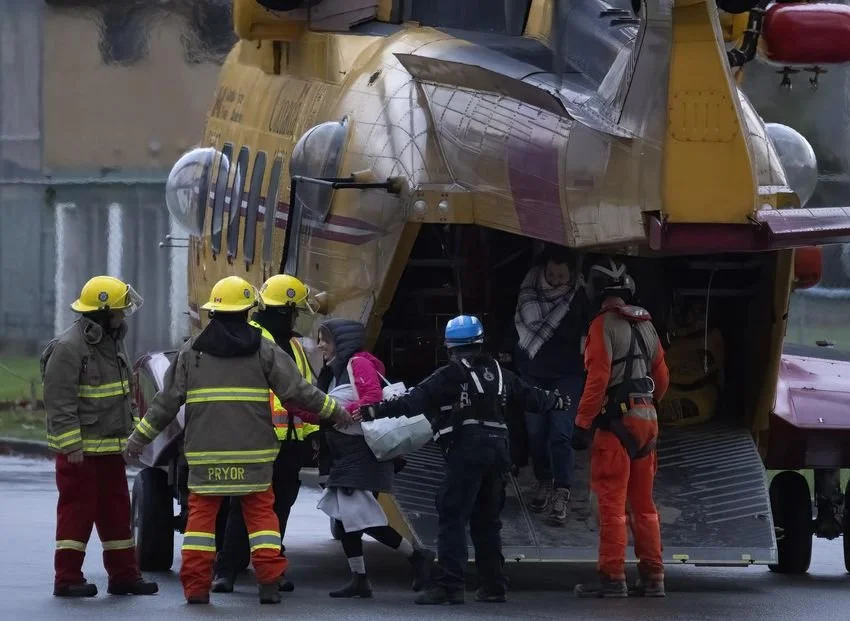
British Columbia has begun the mammoth task of assessing damage to its transportation networks, infrastructure and thousands of properties along the southern part of the province in the wake of devastating floods. The province also expects the death toll to rise. Thousands of people remain out of their homes and thousands of farm animals and livestock were also imperilled as waters washed away homes and left farms under metres of water as the province declared a state of emergency on Wednesday.

Fluoride Debate Trickles Down From Calgary To Strathmore

Fluoride Debate Trickles Down From Calgary To Strathmore

On Monday the City of Calgary debated and approved the reintroduction of fluoride to their water treatment. This week it was revealed that once Calgary updates its fluoridation equipment, in the next 18 to 24 months, Strathmore’s drinking water will include fluoride within Health Canada’s Guidelines for Canadian Drinking Water Quality limits. Fluoride was removed from the city drinking water in 2011, but in 2019 Calgary began discussions about the reintroduction of fluoride. Strathmore receives its water from Calgary. Earlier in 2021, the Town of Strathmore council debated the topic at a Committee of the Whole meeting.

Trailer park residents on the verge of losing their water if leaking pipe not found

Trailer park residents on the verge of losing their water if leaking pipe not found

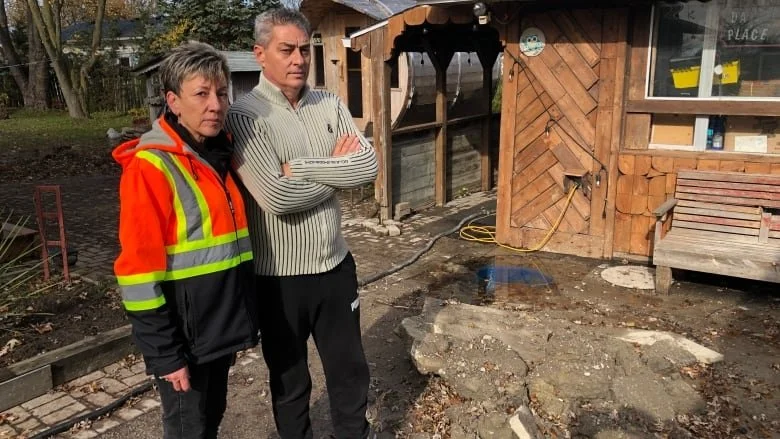
About 130 residents in the Suncrest Trailer park in Lakeshore could have their water shut off as early as Thursday if the owners of the park don't find a leaking water pipe that has caused thousands of dollars in damage to a neighbouring property. "Apparently, no one can find this pipe. That's why blindly they began digging around the garage," said Pavlina Georgieva. Water began bubbling up from under the garage at her and her husband Georgi's house next to the trailer park on October 27. It comes from a pipe owned by the trailer park but despite several efforts no one has been able to locate the pipe.

B.C.'s Fraser Valley is no stranger to floods. Experts warn extreme weather is likely to become more common

B.C.'s Fraser Valley is no stranger to floods. Experts warn extreme weather is likely to become more common

Marilyn Penner, Allan Toop and Nora Weber have spent a combined 170 years living in the eastern Fraser Valley. Toop's and Penner's families have been farming the land for more than three generations, while Weber has lived on the same village corner for well over a decade. All three agreed Monday they've never seen flooding happen the way it did this week.

Flooding in B.C. ‘testing the resilience’ of dairy farmers, says association

Flooding in B.C. ‘testing the resilience’ of dairy farmers, says association

Farmers in southern British Columbia are coming together to save livestock as parts of the Fraser Valley remain under water from devastating flooding, says a member of the association that represents the province’s dairy farmers. Holger Schwichtenberg, chair of the board for the BC Dairy Association, said he was not yet sure how many farmers were working to move their milking cows, but in such situations, they would reach out for help to get their animals off site.

No heat or potable water in Princeton, B.C., as locals brace for freezing temperatures after flood

No heat or potable water in Princeton, B.C., as locals brace for freezing temperatures after flood

The town of Princeton, B.C., remains in a state of emergency after days of relentless rain caused extreme flooding, and now the scramble is on to get heat and water working in the community again as the mercury drops and freezing temperatures add to the emergency situation. Half the town is under water after extreme rains pushed the Tulameen and Similkameen rivers to overflow their banks and dikes on Monday, forcing people to evacuate 295 properties and creating a state of emergency in the community of 3,000, located 190 kilometres east of Vancouver.

Province announces more money for irrigation upgrades

Province announces more money for irrigation upgrades

Alberta’s government announced Friday a $117.7-million addition to the already $815 million being directed toward capital projects in the irrigation sector. The funding was first announced in 2020 as part of the Investment and Growth Strategy, which aims to kick-start provincial economic recovery. Eight of the province’s 13 irrigation districts are participating. “The program is a 30% Government of Alberta grant,” Richard Phillips, general manager of Bow River Irrigation District and chair of Irrigating Alberta Inc., told the News. “The irrigation districts are paying the remaining 70% of that.”

Sask. wastewater analysis sees COVID-19 trend downward in two cities

Sask. wastewater analysis sees COVID-19 trend downward in two cities

Two of the three cities being monitored by researchers at the University of Saskatchewan have shown a drop in the amount of the virus that causes COVID-19 in sewage samples taken during the latest testing period. On Monday, the Global Institute for Water Security's report show a decrease of 79 per cent in viral RNA in North Battleford's wastewater when compared to the previous reporting period. The amount of delta variant found in the wastewater has also decreased by 47 per cent from the previous reporting period.

B.C. floods will be Canada’s most expensive natural disaster this year

B.C. floods will be Canada’s most expensive natural disaster this year

The flooding in southern British Columbia will be the largest natural catastrophic disaster for the insurance industry in 2021, says Marcos Alvarez, DBRS Morningstar’s head of insurance. Insurance companies have not yet been able to provide estimates of what the total cost of damages for the B.C. flooding could tally up to, but Mr. Alvarez said in the past 10 years Canada has had several flood events across the country that each surpassed $1-billion in insurance claims. “Increases in average annual insured weather-related losses are higher in Canada than at the global level,” Mr. Alvarez said. “This is consistent with the notion that the warming of Canada’s climate is happening at about twice the rate of the global average.”

Province grants Blue Triton 5-year permit renewals for water bottling

Province grants Blue Triton 5-year permit renewals for water bottling

The province has renewed the operating permits of Triton Water Canada Holdings Inc. for five years at its water bottling sites in Aberfoyle and Erin. The sites were formerly owned by Nestlé Waters Canada for years before they sold it earlier this year. The Ministry of the Environment, Conservation and Parks announced the permits on Monday. A moratorium on new water taking permits was lifted in April. The new permits allows BlueTriton to take 1.1 million litres of water per day from the Erin location and 3.6 million litres a day from its Aberfoyle location. Despite concerns raised over water extraction permits for years by local community members and environment activists who believe the removal of water could have detrimental effects to the local water supply, the province says otherwise.

Islanders may have hard time finding storm surge insurance as climate change risks rise

Islanders may have hard time finding storm surge insurance as climate change risks rise

Islanders looking toward a future of more frequent extreme weather events may not be able to find the protection they need through insurers just yet. A report released last month said that by 2050, the province will see significantly more severe weather conditions due to climate change. The report said there will be increased risk of coastal erosion, heat waves, heavy rain, flooding, severe ice storms and droughts.

What’s an atmospheric river? Here’s why B.C. is seeing floods, mudslides

What’s an atmospheric river? Here’s why B.C. is seeing floods, mudslides

The torrential rainfall that has pummeled British Columbia in recent days — causing mudslides and flooding, shutting down highways and stranding and displacing thousands — is being fuelled by an atmospheric river. Atmospheric rivers are long, narrow bands of moisture in the atmosphere that carry water from the tropics and subtropics toward the poles.

‘The power of water is crazy’: Residents across southern B.C. left displaced — and devastated — in wake of storm

‘The power of water is crazy’: Residents across southern B.C. left displaced — and devastated — in wake of storm

In the wake of historic atmospheric river rains that have flooded much of southern B.C., thousands of people have been left displaced, disconnected, and struggling with what to do next.

Iqaluit is repairing and upgrading its water system but you still can't drink from it

Iqaluit is repairing and upgrading its water system but you still can't drink from it

Work continues to repair and upgrade Iqaluit's water treatment plant but the do-not-consume order remains in place for now. Earlier Monday, the government of Nunavut issued a reminder to Iqaluit residents not to use their tap water for drinking or cooking, following the discovery of fuel in the city's water system in October. The majority of the contamination was in the north tank, one of two tanks in the water plant.

Abbotsford, B.C., issues urgent appeal to evacuate Sumas Prairie citing possible catastrophic flooding

Abbotsford, B.C., issues urgent appeal to evacuate Sumas Prairie citing possible catastrophic flooding

Officials in Abbotsford, B.C., are urging residents who were told to evacuate Sumas Prairie earlier Tuesday to leave immediately saying worsening conditions pose "a significant risk to life." At a news conference Tuesday night, city officials said a pump station is in imminent danger of failing. The Barrowtown Pump Station is the only thing keeping excess water flow from the Fraser River from entering the flooded area.

Feds should pay to overhaul Iqaluit water infrastructure, Singh says

Feds should pay to overhaul Iqaluit water infrastructure, Singh says

NDP Leader Jagmeet Singh announced in Iqaluit on Tuesday his party intends to push the federal government to spend $180 million to address Iqaluit’s water emergency. “In any major [Canadian] city, if there was a problem with the water, if there were hydrocarbons in the water, what would the federal government do?” Singh said at a news conference at the Iqaluit public library. “They would act immediately to fix the problem.”

Iqaluit’s Water Crisis Demands Action Now

Iqaluit’s Water Crisis Demands Action Now

On October 12, the city of Iqaluit, Nunavut declared a state of emergency following the discovery of fuel contamination in their water supply. A full month later, the city remains in a water crisis, with little indication as to when the water supply will be back in service. The Canadian Armed Forces have been enlisted for an indeterminate period of time to provide potable water to residents. This indefinite military presence in the city is disturbing – the government is forcing citizens to depend on the armed forces for drinking water, a basic necessity. As a city with a large Inuit population, the crisis in Iqaluit highlights the federal government’s continued disregard of Indigenous peoples and their health. According to Lorraine Rousseau, Public Service Alliance of Canada North Regional Executive Vice President, this represents “decades of broken promises and ongoing inequalities that Inuit and Indigenous communities face.”

'What Calgarians have wanted': City council votes 13-2 to return fluoride to tap water

'What Calgarians have wanted': City council votes 13-2 to return fluoride to tap water

Calgary will reintroduce fluoride to its tap water after city council voted overwhelmingly in favour of the change Monday. The vote wasn't close, as 13 members of council voted in favour. Two councillors voted against the motion to reinstate fluoride: Andre Chabot of Ward 10 and Dan McLean of Ward 13. Fluoride was removed following a council decision in 2011. However, Calgarians voted 61.61 per cent in favour of resuming fluoridation in last month's civic election. There was majority support for the move in all 14 of the city's wards.

First fires, now floods: Why B.C. is caught in a horrific dance between climate extremes

First fires, now floods: Why B.C. is caught in a horrific dance between climate extremes

As a month’s worth of rain poured down over 48 hours, the rushing Coldwater River was one of many that breached its muddy banks Monday and filled up the streets of surrounding communities in southern British Columbia as though they were part of a stoppered bathtub. There were RVs collapsed and half submerged by the water. There were school playgrounds, turned to pools. In Merritt, B.C., as she worked to help drag stuck cars and trucks, Carly Isaac sent photographs to the Star with a comment. “Global warming.” She and the town’s roughly 7,000 residents would later receive the order to flee to either Kamloops or Kelowna, each over an hour away.