Unseasonably warm fall another hit for drought-stricken Manitoba farmers

Unseasonably warm fall another hit for drought-stricken Manitoba farmers

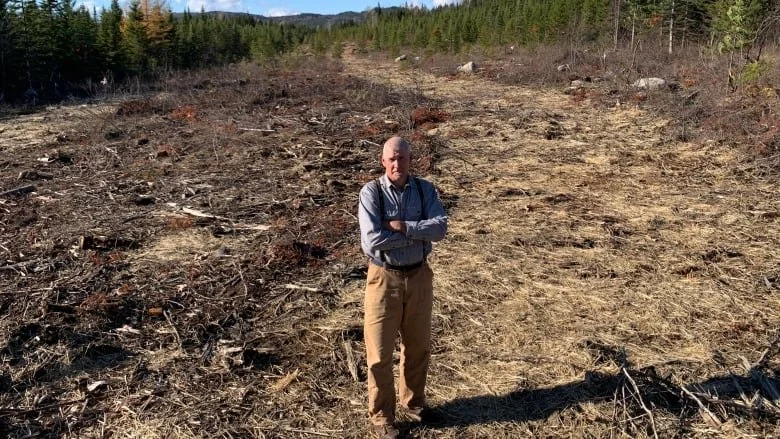
Many Manitobans have come to expect chilly weather and maybe a dumping of snow this time of year, and instead are experiencing an unseasonably warm and pleasant November. It's not good news for farmers, though. Producers have just come out of a hot and dry summer and are hoping for rain and snow to build up soil moisture for the next growing season, but that hasn't happened yet.

EPA will undertake environmental review on transborder water projects

EPA will undertake environmental review on transborder water projects

The Environmental Protection Agency will move forward with environmental review of several water infrastructure projects intended to address transborder water pollution from the Tijuana River, it was announced Monday. “In order to protect public health and vital ecosystems in this vibrant area, we need a bold solution to the transboundary water pollution challenge,” said EPA Assistant Administrator for Water Radhika Fox.

Research to improve water quality in P.E.I. benefits everyone, say scientists

Research to improve water quality in P.E.I. benefits everyone, say scientists

With groundwater an important resource in P.E.I., a collaborative research project is looking at what effect agricultural practices have on it. Scientist Yefang Jiang and technician Ana Kostic from Agriculture and AgriFood Canada (AAFC) were in Kinkora recently collecting samples to see how farming impacts water quality as part of the Living Lab – Atlantic project.

Conservationists work to update flood risk map along Ottawa River

Conservationists work to update flood risk map along Ottawa River

A conservation authority is working to update flood hazard maps for parts of eastern Ontario, which will help municipal governments assess the risk of flooding when planning for the future. The South Nation Conservation (SNC), an organization dedicated to the protection and restoration of ecosystems in the region, is leading the efforts to update the maps, which hasn't been done for many years.

First-of-its-kind map outlines Canada's future flood zones

First-of-its-kind map outlines Canada's future flood zones

The first flood map of its kind demonstrates how low-lying areas of some of Canada’s major cities could become flooded within the next 80 years. The maps were developed by Slobodan Simonovic, engineering professor emeritus and flood-control expert at Western University. Spanning the entire country, they predict flood activity over the next 80 years based on various climate change scenarios caused by global warming. “[This] was the continuation of our interest in understanding better what are the impacts of climate change on natural disasters in general,” Simonovic told CTV News Channel on Sunday. “My part of the project was to look at how flooding will be affected by climate change.”

OBWB briefs: Survey shows rising concern for water security

OBWB briefs: Survey shows rising concern for water security

A secure water source is the top environmental issue in the province, according to a public opinion poll released Oct. 20 by the Real Estate Foundation of BC and the University of Victoria’s POLIS Water Sustainability Project. In a survey report presented to the Okanagan Basin Water Board directors at their Nov. 2 meeting, a majority of respondents, 77 per cent, want industry to pay more to restore and secure watersheds. And 66 per cent of respondents, up from 57 per cent in the last survey done in 2018, now say they are concerned about the potential for a major water crisis in their community over the next few years.

Australia is putting a rover on the Moon in 2024 to search for water

Australia is putting a rover on the Moon in 2024 to search for water

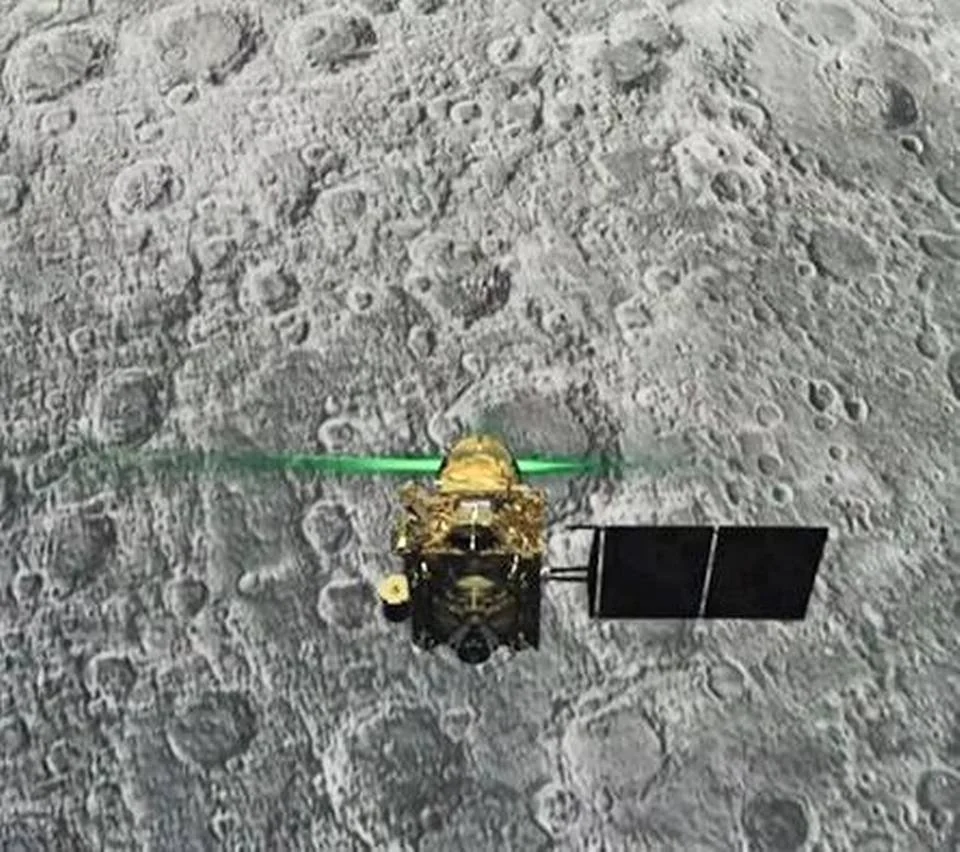
The ten-kilogram rover, measuring 60x60x50cm, will be launched on board the Hakuto lander made by ispace, a lunar robotic exploration company based in Japan. The rover itself, also built by ispace, will have an integrated robotic arm created by the private companies Stardust Technologies (based in Canada) and Australia’s EXPLOR Space Technology. Using cameras and sensors, the arm will collect high-resolution visual and haptic data to be sent back to the mission control centre at the University of Technology Sydney. It will also collect information on the physical and chemical composition of lunar dust, soil and rocks - specifically with a goal of finding water. We know water is present within the Moon’s soil, but we have yet to find a way to extract it for practical use. The big push now is to identify regions on the Moon where water sources are more abundant, and which can deliver more usable water for human consumption, sample processing, mining operations and food growth.

Massive snowfall needed this winter after summer of drought: Manitoba infrastructure minister

Massive snowfall needed this winter after summer of drought: Manitoba infrastructure minister

Manitoba's extremely dry summer and unseasonably warm fall have led to historic lows for river and lake levels across the province. And that could mean trouble come spring — unless the province gets an enormous snowfall this winter, Infrastructure Minister Ron Schuler says. "We haven't seen something like this since the 1930s, so we are very concerned," Schuler told host Shannah-Lee Vidal in a Friday interview on CBC's Radio Noon.

Toronto is home to the world’s largest lake- powered cooling system. Here’s how it works.

Toronto is home to the world’s largest lake- powered cooling system. Here’s how it works.

But unlike other sports venues, Scotiabank Arena doesn’t keep its temperatures in check using air conditioners. Toronto is home to the world’s largest deep lake water cooling (DLWC) system. Conceptually, the technology is relatively simple. Instead of relying on energy-intensive compressors and chillers to dissipate heat from buildings, DLWC uses water from nearby Lake Ontario to whisk away the warmth.

USask research aims to identify how ‘thirsty’ forests affect water availability

USask research aims to identify how ‘thirsty’ forests affect water availability

University of Saskatchewan (USask) graduate Dr. Magali Nehemy (PhD) and her research team investigated how plants use water — where they get it, when they need it and how these processes impact overall water availability. Understanding the way plants use water can assist farmers to work efficiently and productively. Irrigation schedules and fertilizer applications depend heavily on the amount of water available in the surrounding soil and how efficiently plants can use it.

Steel River Group’s new entity Water Care Company receives Alberta Innovates grant funding for water pilot project in Stoney Nakoda First Nation

Steel River Group’s new entity Water Care Company receives Alberta Innovates grant funding for water pilot project in Stoney Nakoda First Nation

Steel River Group Ltd. (Steel River) is honoured to share that its new entity, Water Care Company (Water Care), has received funding from the Alberta Innovates Water Innovation Program for its first water treatment project in Stoney Nakoda First Nation. The support we received will play an important role in creating a solution to the water crisis facing Indigenous and remote communities across Canada.

Wet'suwet'en members prepare for winter, plan to stay until Coastal GasLink work halted permanently

Wet'suwet'en members prepare for winter, plan to stay until Coastal GasLink work halted permanently

It's been more than 40 days since Wet'suwet'en members and supporters occupied a Coastal GasLink work site near the Wedzin Kwa (Morice River) — and despite multiple arrests, they say they're determined to stay put until Coastal GasLink permanently halts work on their territory. "It's our sacred headwaters, our clean drinking water, and our salmon spawning river," said Sleydo', referring to the Wedzin Kwa. Sleydo', whose English name is Molly Wickham, is the spokesperson for the Gidimt'en Checkpoint, which controls access to the part of the Wet'suwet'en territory on which the drill site is located.

Iqaluit's water crisis has cost the city $1.5 million so far

Iqaluit's water crisis has cost the city $1.5 million so far

Iqaluit's water crisis has so far cost the municipality more than $1.5 million. And this is only the start. City councillors will hold a special meeting on Friday to formalize a request for assistance from the Government of Nunavut to help cover the cost. The meeting's agenda includes a breakdown of the costs incurred so far.

These aquatic invaders pose a big risk in Alberta

These aquatic invaders pose a big risk in Alberta

Nicholas Mandrak, a professor at the University of Toronto who has spent much of his career studying invasive fish species in Canada, says impacts on water systems vary by species. Prussian carp, like goldfish and common carp, will uproot vegetation in order to find food. When that happens, the fish kill vegetation that may act as nutrient sinks in sewage lagoons or drinking water ponds.

Saving Sutton's water supply a key election issue for the Quebec town

Saving Sutton's water supply a key election issue for the Quebec town

Access to water is on voters' mind in Sutton, Que., this municipal election. The town, which is about 110 kilometres southeast of Montreal, has had many issues with its water supply over the years. Residents are hoping their next mayor will find solutions to the problem. "There is really not enough water right now," said resident Johanna Ryffel. "You walk by every stream, and the stream beds are almost dry."

Why a P.E.I. watershed group wants to get the sediment out and the meander back in a local river

Why a P.E.I. watershed group wants to get the sediment out and the meander back in a local river

Some rivers in the Cornwall, P.E.I., area have some new features this fall, designed to attract more wild Atlantic salmon. The fish is in the process of being listed as a species of special concern on P.E.I., under the Species at Risk Act, because of damage that has been done to its habitat. "The natural habitat would have been cobble, and it would have been rocky," said Karalee McAskill, co-ordinator for the Cornwall and Area Watershed Group.

Maine referendum deals blow to Hydro-Québec project

Maine referendum deals blow to Hydro-Québec project

Voters in Maine voted about 60-40 to halt construction of the project and force its backers to obtain two-thirds support in the state legislature if they want to complete it. That's after the most expensive referendum campaign in state history, where ads for and against the plan lined highways and bombarded television viewers. Legal fights are likely.

The Grand River is full of contaminants says award winning Indigenous McMaster prof.

The Grand River is full of contaminants says award winning Indigenous McMaster prof.

"I don't think any of us were really prepared for the scope and magnitude of the problem so we had to continuously write more grants to address emerging issues. More than anything, it was shocking," said Martin-Hill, who is Mohawk and Wolf Clan. "I really assumed the worst case scenario was going to be in Alberta and to find out the kinds of contamination that have gone into the Grand River for a century, the problems here are much worse."

Second water intake could cost Cornwall $40 million

Second water intake could cost Cornwall $40 million

The mood at Cornwall city council was somber during a special meeting on Monday evening. Council received two presentations — by EVB Engineering and Jacobs Engineering Group —regarding the environmental assessment study associated with the development of a second raw water intake for Cornwall’s municipal water system. Currently, the city’s only source of water is from a 65-year-old underwater intake to the west of the Moses-Saunders Dam. From there, the water is gravity-fed from Riverdale all the way to the water purification plant at 861 Second St. W.


Leaders link tackling water and climate at COP26 as crisis looms

Leaders link tackling water and climate at COP26 as crisis looms

Governments and U.N. agencies meeting at COP26 in Glasgow https://www.reuters.com/business/cop formed a water and climate coalition on Tuesday to address growing hazards and shrinking reserves. Led by the presidents of Tajikistan and Hungary, the coalition will seek to implement reforms which the United Nations' World Meteorological Organization says are needed in the global management of water resources.