Red Lake warns of possible water contamination after overflow of raw sewage

Red Lake warns of possible water contamination after overflow of raw sewage

The municipality of Red Lake is issuing a caution about possible water contamination for people who draw from the lake. The municipality put out an advisory on Tuesday, warning that there has been an overflow of raw sewage into Howey Bay on Red Lake. The notice applies to people who use lake water from the eastern portion of Red Lake from Howey Bay to McNeely Bay, extending east downstream along the Chukuni River, including Keg Lake, Gullrock Lake and Two Island Lake.

Amid lead crisis, EPA orders Benton Harbor to fix water quality violations

Amid lead crisis, EPA orders Benton Harbor to fix water quality violations

Federal environmental regulators have flagged Benton Harbor’s water system for a host of problems, from inadequate water treatment to a failure to adequately notify residents about high lead levels that have plagued the water system for at least three years. In an order Tuesday, officials with the U.S. Environmental Protection Agency told Benton Harbor it must fix a range of Safe Drinking Water Act “violations and deficiencies” identified during a September inspection.

California farm town lurches from no water to polluted water

California farm town lurches from no water to polluted water

The San Joaquin Valley farm town of Teviston has two wells. One went dry and the other is contaminated. The one functioning well failed just at the start of summer, depriving the hot and dusty hamlet of running water for weeks. With temperatures routinely soaring above 90 degrees Fahrenheit (32 degrees Celsius), farm workers bathed with buckets after laboring in the nearby vineyards and almond orchards.

COP26 news: A day of promises on water, methane and fossil fuels Read more: https://www.newscientist.com/article/2295885-cop26-news-a-day-of-promises-on-water-methane-and-fossil-fuels/#ixzz7BAvJxY3a

COP26 news: A day of promises on water, methane and fossil fuels  Read more: https://www.newscientist.com/article/2295885-cop26-news-a-day-of-promises-on-water-methane-and-fossil-fuels/#ixzz7BAvJxY3a

The UK and other countries announced a new initiative to help small island states, which are arguably the countries most threatened by climate change. Due to rising seas, many may find themselves literally underwater. The new scheme is called the Infrastructure for Resilient Island States (IRIS) facility. It will help small island states to build up resilient infrastructure. The UK is contributing £10 million in the initial phase.

Cornwall Council hears of serious vulnerability to city’s water supply

Cornwall Council hears of serious vulnerability to city’s water supply

Cornwall City Council received a report from EVB Engineering at a special meeting on Monday, Nov. 1 about a potential vulnerability to the city’s water supply and solutions on how to address the problem. The water received at the City of Cornwall’s Water Purification Plant (WPP), located on Second St. W., is taken from the St. Lawrence River through an intake pipe located west of the R.H. Saunders Dam in the city’s west end. That pipe is roughly 65-years-old and is reaching the end of its service life. Even if it were not so old, the fact that the water plant has only one intake pipe was identified as a vulnerability in the system.

Residents excluded from class action over water contamination in Shannon, Que., to get compensation

Residents excluded from class action over water contamination in Shannon, Que., to get compensation

Residents who were left out of a class-action lawsuit for water contamination in a small town northwest of Quebec City are finally eligible to receive compensation after drinking water polluted with trichloroethylene (TCE), a carcinogenic degreasing agent, for decades. A panel of judges at Quebec's Court of Appeal unanimously agreed to modify an order made last year for the federal government and two private companies, Valcartier Real Estate Corporation and General Dynamics, to compensate residents affected by the contamination.

26% of Hamilton drinking water doesn't make it to taps. Here's what the city is doing

26% of Hamilton drinking water doesn't make it to taps. Here's what the city is doing

The city has a new plan to detect water leaks faster, after the revelation that a quarter of its fresh drinking water never makes it to Hamilton homes. Twenty-six per cent of the treated water destined for local taps, or 19.916 megalitres per year, escapes through broken and leaky pipes, says Dave Alberton, Hamilton's manager of water distribution. That's higher than the provincial average of 15 per cent, he said, and it's expensive and bad for the environment.

Sask. researchers see downward trends in COVID-19 wastewater testing

Sask. researchers see downward trends in COVID-19 wastewater testing

The most recent COVID-19 wastewater study from the University of Saskatchewan shows a drop in the amount of COVID-19 virus in sewage samples taken from three cities in the province. On Monday, the Global Institute for Water Security's report showed a decrease of 44 per cent in viral RNA (Ribonucleic acid) in Saskatoon's wastewater samples compared to the previous reporting period.

Is your well doing well? Water well, that is.

Is your well doing well? Water well, that is.

With many residents of Woodlands County utilizing well water, the municipality hosted a virtual workshop on October 21 on managing wells. The event streamed live and enabled attendees to ask questions in real-time. Multiple specialists were on hand, including Jeff Hammer, a Public Health Inspector for Alberta Health Services. Hammer discussed the importance of testing water and why it’s essential to do so. “We have two types of tests available at the health units. One is a bacteriological bottle which we test for total Coliform and E. coli. Total Coliform is an indicator of bacteria, and E. coli is basically fecal matter which you never want to see. The other type of test we have is a chemical water sample. It does a bunch of minerals and metals and has some more health parameters associated with it.” Hammer said that some of the minerals and metals tested for include manganese, lead, arsenic, and the pH value of the water.

Cdn. ag making clean water

Cdn. ag making clean water

Scientists in Saskatchewan are using ag waste to make clean water. Khaled Benis, a Vanier Scholar and Ph.D. candidate at the University of Saskatchewan’s college of engineering, and his colleagues, have identified how to transform wheat and canola straw into a filter capable of absorbing arsenic from water. Canada produces about 47 million tonnes of ag residue per year. “We make the (crop residue) similar to activated carbon or ion exchange resin that can be used as alternatives to expensive materials. Crop residue is available everywhere and is a sustainable material.” Benis told Farms.com. “We collect the residues and perform physical or chemical treatments to activate the potential to absorb the arsenic.”

Students highlight water concerns with storm drain symbols

Students highlight water concerns with storm drain symbols

There are yellow fish in the Nepahwin Lake watershed, but they’re not in the water. With brushes and stencils in hand, Lo-Ellen Park Secondary School students have painted yellow fish symbols with the words ‘Rain Only’ on area storm drains. It’s all part of Trout Unlimited Canada’s Yellow Fish Road education campaign and a collaborative project by Lo-Ellen Park Secondary School, the Junction Creek Stewardship Committee and the Nepahwin Lake Watershed Stewardship Group, with support from the City of Greater Sudbury Lake Stewardship Grant Program.

Non-profit in Salt Spring Island, B.C. offers rebate to homeowners collecting rainwater

Non-profit in Salt Spring Island, B.C. offers rebate to homeowners collecting rainwater

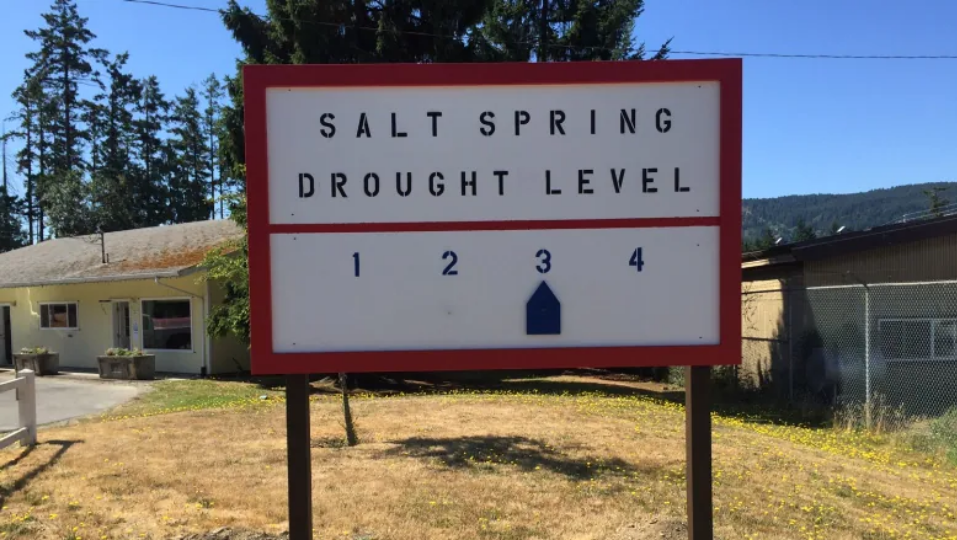
A non-profit organization in Salt Spring Island, B.C., dedicated to fighting climate change is encouraging residents to take advantage of the rain this fall by installing a rainwater collection system. Transition Salt Spring (TSS), with the help of the Capital Regional District, piloted the Rainwater Harvesting Rebate program on Oct. 1, which offers homeowners $250 to $500 for installing cisterns to catch and store rainwater on their property.

Lead in school water: Quebec chemists dispute testing method and results

Lead in school water: Quebec chemists dispute testing method and results

In 2019, the Quebec government asked public and private educational institutions to analyze the concentration of lead in drinking water using portable devices called "Kemio Heavy Metals." OCQ president, Michel Alsayegh, deplored the use of this type of device, citing "a significant risk of false negatives, which is worrisome for the health of children and staff." "As early as 2019, when we met with the office of the Minister of Education, we had expressed doubts about the reliability of the results with this type of instrument," said Alsayegh in an interview with The Canadian Press.

Drinking water impairment on St. Clair River close to being resolved

Drinking water impairment on St. Clair River close to being resolved

Thirty-four years ago, the St. Clair River was proclaimed an environmental disaster. Now, environmental and business groups are working to resolve one of the most intractable impairments to the river — restrictions on drinking water consumption or taste and odor problems with the water. Sheri Faust, president of the Friends of the St. Clair River, is hoping that enough progress can be made by 2022 to remove the impairment. On Oct. 19, the Friends hosted a Zoom presentation on the status of drinking water from the river. About 25 people tuned into the mini-conference.

Construction on long-awaited Springbank reservoir to protect Calgary area from floods is officially a go

Construction on long-awaited Springbank reservoir to protect Calgary area from floods is officially a go

The Alberta government says it has secured all the land it needs to make construction officially a go on a long-awaited reservoir needed to protect Calgary and surrounding communities from disastrous floods — like the one that killed five people and caused billions of dollars in damages in 2013. The $432-million Springbank off-stream reservoir will redirect water from the Elbow River into a dry reservoir should extreme flood events occur. With up to $168.5 million in federal funding, the reservoir will be built on about 1,497 hectares of land near the rural community of Springbank, which is west and upstream of Calgary.

Iqaluit’s water test results: what we know and don’t know

Iqaluit’s water test results: what we know and don’t know

Graphs released last week that show what has contaminated Iqaluit’s drinking water don’t include enough information to be useful, say two University of Toronto professors. Nunavut’s chief medical health officer, Dr. Michael Patterson, presented and interpreted the graphs at an Oct. 22 news conference. They are missing key information, including labelling and actual concentrations for each compound detected, said Miriam Diamond, a professor of earth sciences at the University of Toronto. Diamond is one of two experts Nunatsiaq News asked to help interpret how the data were presented in the graphs.

PyroGenesis Canada selected to provide $9.2M system to destroy harmful PFAS in drinking water

PyroGenesis Canada selected to provide $9.2M system to destroy harmful PFAS in drinking water

PyroGenesis Canada Inc said it has been selected to provide a $9.2 million land-based system to destroy perfluoroalkyl and polyfluoroalkyl substances (PFAS) in drinking water. The company said the client is a large operator of public water systems, whose name will remain confidential for competitive reasons. PFAS are a group of man-made chemicals found in countless household items such as electronics, cleaning supplies, and non-stick cookware, which can contribute to harmful human health conditions including cancer and hormone disorders.

Greenstone Mine officially under construction

Greenstone Mine officially under construction

Towedo, along with other First Nation chiefs at the ceremony, made reference to the mine being a steward of the land, ensuring it protects water and other natural resources. The mine will relocate tailings from a former tailings site for the McLeod-Mosher and Hardrock Mine. The movement of the tailings is slated to actually improve water quality in neighbouring Kenogamisis Lake, and reduce the amount of arsenic in Barton Bay and the Central Basin.

Melfort Water Treatment Plant upgrades lower risk of precautionary drinking water advisories

Melfort Water Treatment Plant upgrades lower risk of precautionary drinking water advisories

A new $9.6 million addition to the Melfort water treatment plant is intended to extend the longevity of the regional system, providing redundancy and a 40 to 50 year life span. The original water treatment plant in Melfort was built in 1958 and underwent upgrades in 1972. It was expanded in 1994, shortly after SaskWater purchased the plant. The system supplies water to approximately 9,000 users from the City of Melfort, the Melfort Rural Pipeline Association, the Village of Weldon, the Town of Kinistino, the Village of Beatty, the Town of Star City, Star City Farming, and Wapiti Valley Regional Park as well as several individual rural users.