A day after high tides and extreme weather battered parts of B.C.'s South Coast, many communities are assessing the damage. Flooding and dangerous conditions along waterfronts around the South Coast resulted in closures, warnings and damage to infrastructure like seawalls and piers. On Friday, the town of Qualicum Beach on the east coast of Vancouver Island said its seawall had been partially damaged, and asked the public to avoid the area.
Court rejects First Nations' bid to change flow of river to alleviate damage caused by northern B.C. dam
A B.C. judge has rejected a bid by two First Nations to force Rio Tinto Alcan to change the flow of a river to benefit fish stocks decimated by the construction of a dam on the Nechako river. The Saik'uz and Stellat'en First Nations wanted B.C. Supreme Court Justice Nigel Kent to make the order — which would have been a first for a Canadian judge. But while Kent found there was no doubt the Kenney Dam's impact on white sturgeon and salmon populations had "hugely negative impacts" on Indigenous communities, he said Rio Tinto Alcan complied with plans approved by both provincial and federal governments — giving the company a valid defence against claims for damages.
B.C. forestry company followed rules but could have done more to prevent landslides, says independent watchdog
An investigation by B.C.'s independent watchdog for forestry management practices has found that Tolko Forest Industries were not responsible for landslides in Vernon, B.C. in 2020, but that the company could have done more to help mitigate the situation. Kevin Kriese, chair of the Forest Practices Board, says a complaint had been made by a group called Silver Hills Watershed Watch, who were concerned about Tolko's timber harvesting operations between Lumby — in the northern Okanagan Valley, east of the city of Vernon — and Cherryville, further east.
The two times the water stopped flowing over Niagara Falls
The majesty that is Niagara Falls has had its, well, less majestic moments over the past two centuries. In fact, twice the falls have dried up completely – once stopped by nature and the second time 120 years later, it was stopped by man. Way back on March 30, 1848, the falls went down to a trickle, leaving local American and Canadians citizens on both sides puzzled. Given the limited technology and means of communication at the time – Alexander Graham Bell didn’t invent the telephone until 1876 – no one knew why it simply stopped.
'It was stunning': Wastewater data shows high levels of Omicron variant in Waterloo Region
Researchers studying the presence of the virus causing COVID-19 in local wastewater say the amount of Omicron variant detected in the water has increased rapidly over the past few weeks. Mark Servos, the Canada Research Chair in Water Quality Protection, said Omicron spread appeared in wastewater far faster than any other variant to date. "It just went up so dramatically, so quickly," he said at Waterloo Region's weekly COVID-19 update on Friday. "It was stunning."
Why testing sewage for COVID-19 could be more useful than ever
The COVID-19 testing system has been overwhelmed by the Omicron variant, making it impossible to know how many people are infected. Monitoring for the novel coronavirus in wastewater could help fill the gap, says Rob Delatolla, a professor of civil engineering at the University of Ottawa and one of dozens of researchers across Canada that have been developing and using the technique. "I think it just became that much more valuable," he said.
Maintenance led to new water tank contamination, City of Iqaluit says
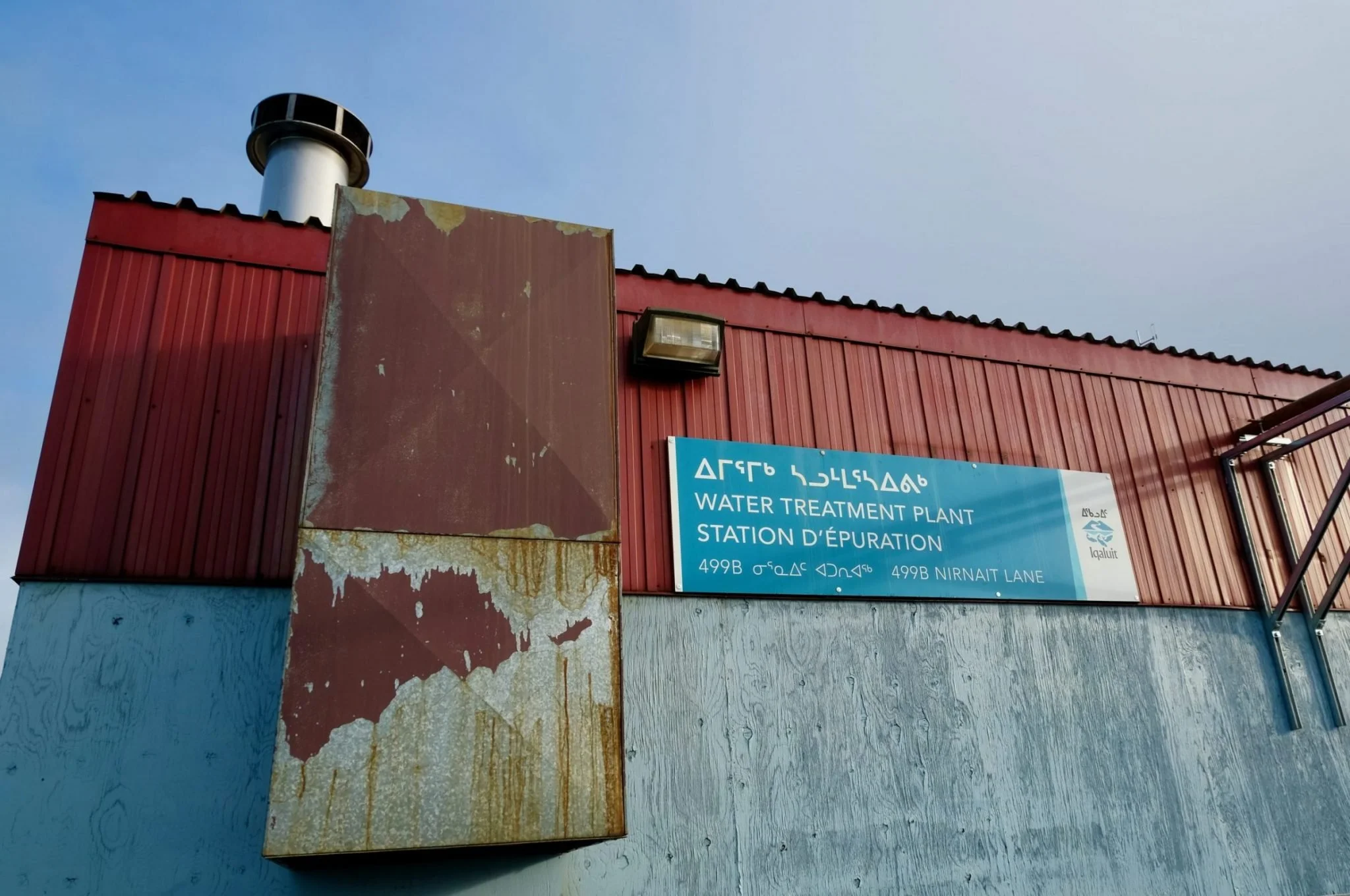
The City of Iqaluit’s new water quality monitoring station detected measurable amounts of hydrocarbons in one of the city’s treated water tanks on Dec. 16, six days after the Government of Nunavut lifted its do-not-drink order. The city disclosed the incident in a Thursday news release that also outlines its work to ensure municipal water is safe to drink, following an eight-week emergency caused by fuel contamination of the water supply.
Scientist sounds water crisis alarm
The megadrought affecting the western United States has prompted a scientist to warn that Canada’s prairie provinces need to better plan how water is used across the entire Saskatchewan river system. “A water expert from California we had up here a few years ago said that Alberta and Saskatchewan reminded him of California and Arizona around 1912,” said John Pomeroy, the Canada Research Chair in Water Resources and Climate Change at the University of Saskatchewan. “We’re still getting by OK, we have pretty loose agreements, everybody’s getting along, it’s fine – but we have trouble ahead.”
Sudbury-Manitoulin health unit considers posting COVID-19 wastewater data
As Ontario government criteria have changed for eligibility for PCR testing for COVID-19, Public Health Sudbury and Districts says it is looking into posting that data online. As of Dec. 31, symptomatic testing became available for only high-risk individuals or people who work in high-risk settings, like hospitals and long-term care facilities. Dr. Penny Sutcliffe, medical officer of health for the Sudbury-Manitoulin districts, said that change means reported case numbers aren't telling the whole story.
B.C.'s cold snap could have positive effects going into spring, experts say
The cold snap and high amounts of snowfall currently blanketing B.C. may have long-term benefits for the province, according to experts. Environment Canada has issued extreme weather warnings for most of B.C. on Thursday, with up to 30 centimetres of snow expected in Metro Vancouver and 25 centimetres on Vancouver Island.
Join the Water Innovation Challenge
BlackBerry and the Water Institute are partnering on an inaugural Water Innovation Challenge launching in the Winter 2022 academic term. The purpose of the challenge is to engage Water Institute professors and students in proposing research and development projects that advance BlackBerry’s technology interests while addressing water-related challenges or opportunities, with particular reference to UN SDG6 for Clean Water and Sanitation or related SDG’s (for example, SDG 11 Sustainable Cities and Communities, SDG 13 Climate Change and SDG 14 Life under Water).
Insurance isn't enough: Governments need to do better on natural disaster resilience
The massive floods in British Columbia in November 2021 demonstrated the devastation that natural disasters can cause in Canada. Prior to 2010, it was rare for annual insured losses from natural disasters in Canada to exceed $1 billion, but now insured losses of $3 billion are not uncommon. Canada is expected to become wetter, stormier, warmer and to experience more severe connective storms and wildfires. The Insurance Institute of Canada forecasts that annual insured losses could increase to $5 billion within the next 10 years.
Protecting the environment should be everyone's 2022 resolution
That walk had me questioning what it will take for people to recycle properly, or if people even know current recycling dos and don’ts. After seeing containers with food particles still stuck to them, paint cans and everything in between, I wondered if we are winning or losing the battle on recycling. And why do some homes still have seemingly hundreds of single-use plastic water bottles filling their recycling bins?
Canada to compensate First Nations for decades of dirty water
It’s Tuesday, January 5, and Canada is spending billions on clean drinking water for First Nations communities. Tens of thousands of Indigenous people in Canada have spent decades without reliable access to clean drinking water. Now, the Canadian government has plans to put it right. A court-approved settlement released late last month commits Canada to spending more than $4 billion on improvements to drinking water infrastructure at hundreds of Indigenous reserves throughout the country. Another $1.18 billion will be provided in damages to some 140,000 First Nations people who have lived under drinking water advisories for longer than a year, often under orders to boil water to avoid potential contamination from bacteria like E. coli.
New data shows Omicron was in Nova Scotia wastewater in November
A research team at Dalhousie University started detecting Omicron in Nova Scotia wastewater weeks before the COVID-19 variant was officially confirmed in the province. "It was surprising to us to see a viral signal in early November. Only in retrospect were we able to see that it was a variant and not the original," said Prof. Graham Gagnon, director of the Dalhousie University Centre for Water Resource Studies.
NSP suspends plan to charge ratepayers $18M for dam cost overruns
Nova Scotia Power has suspended its application to charge ratepayers $18 million for cost overruns on an ill-fated hydro dam as water migration at the construction site persists. The utility said it is not clear yet what impact continued water infiltration will have on the replacement of the small dam at Tusket near Yarmouth. Unexpected water seepage has already doubled the cost to $36 million and pushed the project three years behind schedule.
City of Toronto frozen pipes public education campaign encourages residents to take action during extreme cold temperatures
Tips to avoid frozen water pipes in the home: Know where to find the main water shut-off valve and how it works (in case your pipes burst) and ensure areas that contain indoor water pipes are kept above eight (8) degrees Celsius, especially near the water meter. Keep garage doors closed if there are water supply lines in the garage. Outdoor faucets are the first to freeze. Unscrew any hoses, turn off the outdoor water supply and let the taps drain. Insulate pipes most prone to freezing, especially near outside walls and in crawl spaces, the attic and garage. This can be done with foam pipe covers available from building supply or home improvement stores.
Video of Canadian stream quickly disappearing beneath ice goes viral
As the temperature dipped to a new low at Squamish in Canada, frazil ice, which is somewhat of a rarity, was captured on camera. In a video in which the rare phenomenon has been captured, it looks as if a stream is instantly disappearing before the eyes as the snow covers the area. Sharing the video on Twitter, one user, Brad Atchison, wrote: “An example of rarely seen Frazil Ice from Shannon Falls in Squamish, BC yesterday morning. The stream disappears instantly before your eyes.” The video has taken the internet by storm.
Canada is an energy superpower – and that doesn’t just mean oil
But the future is going to require all kinds of energy – solar, wind, hydro, nuclear, bioenergy (and yes, fossil fuels too). Even the formerly oil-centric IEA has shifted; last May, it issued a landmark road map to net zero by 2050. Canada has long been wealthy in energy, and will continue to be. Fossil fuels were the cornerstone, which is why they became synonymous with “energy.” But it’s time to redefine the term. Canada has vast resources beyond oil and gas. When we say energy, we need to also see solar, water, wind and, yes, uranium. They’re right there. We just have to tap them.
Freezing weather compounds challenges for B.C. farmers dealing with flood aftermath
Dave Martens is working on rebuilding his poultry farm and his home, which he hasn't been able to live in since the Sumas Prairie region east of Abbotsford, B.C., was hit by floods triggered by historic rainfall in November. "Currently I'm at the point of trying to dry things out still," said Martens of the two farm houses he owns, one of which he lives in. "You hear people talk about people being back in their homes and things like that. That might be true for some, but not the majority."