Curriculum connections for grades four to twelve all across Canada.
Alberta Grade Nine Science
Unit C: Environmental Chemistry (Social and Environmental Emphasis)
2: Identify processes for measuring the quantity of different substances in the environment and for monitoring air and water quality
Is Our Water Safe? What Should We Do If Our Water Is Not Safe? Problem-Based Learning Lesson
1. Put the students into groups of 3-5. 2. Provide the students with the "Not In My Backyard?" handout. 3. Have the students define the problem and determine what they know about the problem, what they need to learn more about, and where they need to look to find information. 4. Groups conduct research, find information, and work towards deciding what they should do. The teacher acts as a metacognitive coach, serving as a model.
Operation Water Drop Taking It Further Problem-Based Learning Lesson
1. The first thing you are going to want to do with your Operation Water Drop kit is to use it. Test the water samples you have been given and your local drinking water (as well as three other water samples such as urban, rural and raw water, in the case of High School Operation Water Drop kits) with the kit’s contents. Record these test results.
All Elementary Operation Water Drop Lessons in One PDF Document
Elementary Operation Water Drop Instructions (PowerPoint and Video Format)
What is Safe Drinking Water? (Elementary)
Testing the Water We Drink! (Elementary)
Elementary Operation Water Drop Data Sheet
Total Hardness Problem-Based Learning Set
In your city, the drinking water was being inspected. After thorough inspection of your city’s water supply, there was data collected on many different aspects of your water supply. As the health and safety inspector it is your job to look through this data and find anything that may be hazardous to the public.
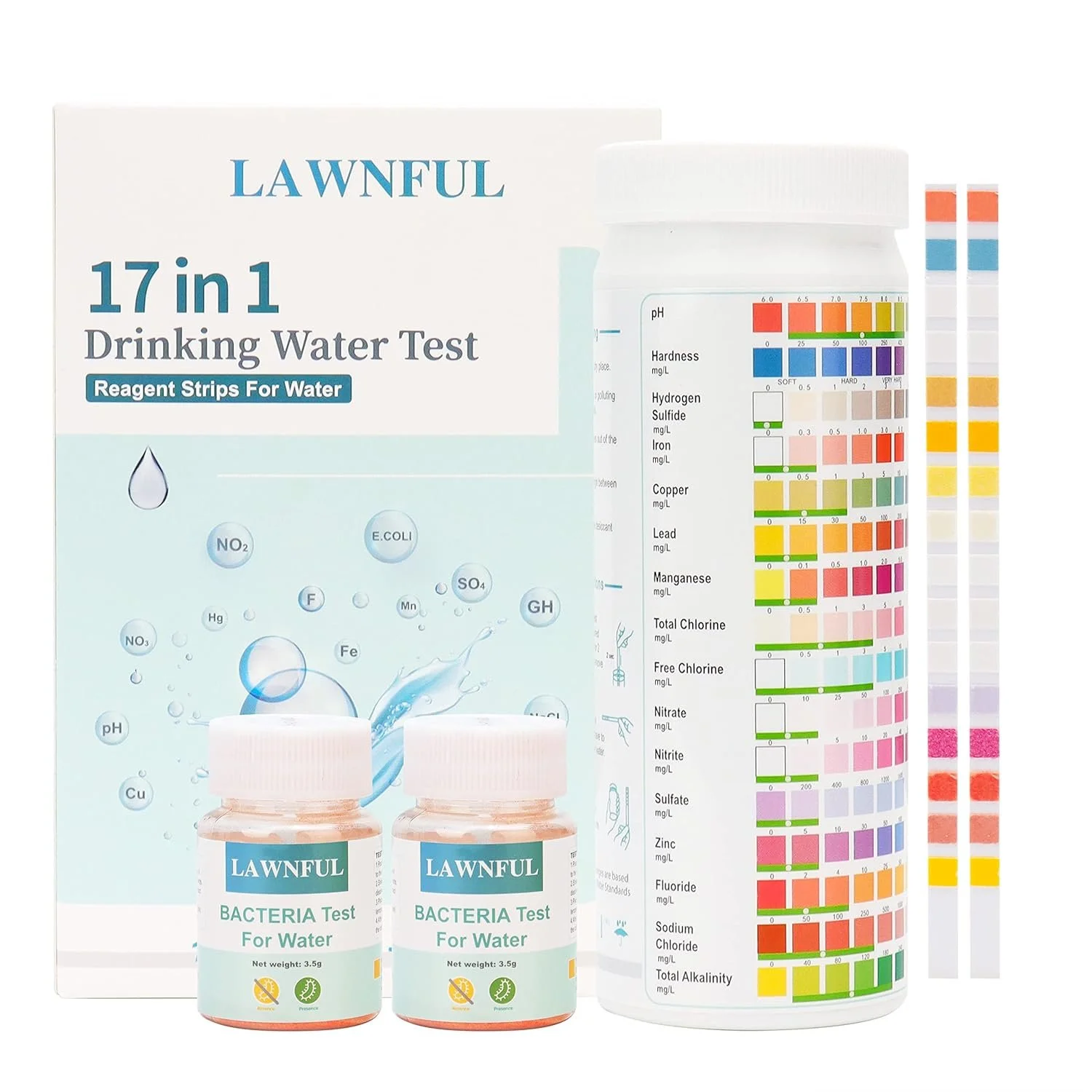
LAWNFUL 17 in 1 Drinking Water Test Taking the Place of Some Kit Materials
Learn how to use the Lawnful 17 in 1 Drinking Water Test - Reagent Strips for Water and the Lawnful Bacteria Test for Water. You will be able to test for pH, hardness, hydrogen sulfide, iron, copper, lead, manganese, total chlorine, free chlorine, nitrate, nitrite, sulfate, zinc, fluoride, sodium chloride, total alkalinity, and bacteria (E. Coli/Water Contamination).
Alkalinity Analysis for Elementary Operation Water Drop
Alkalinity Analysis Instructions for Elementary in PowerPoint and Video Format
Ammonia Analysis for Elementary Operation Water Drop
Ammonia Analysis Instructions for Elementary in PowerPoint and Video Format
Colour Analysis for Elementary Operation Water Drop
To determine if the water sample meets Canadian Drinking Water Guidelines for Colour. Testing will be done on Local community treated water. The Canadian Drinking Water Guidelines has an aesthetic objective of 15 TCU (True Colour Units) for drinking water; you will test and compare your result to see if it meets these guidelines.