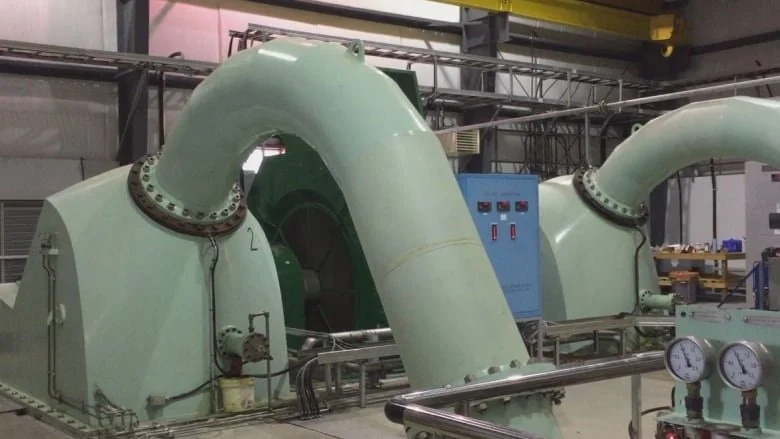
The mayor of Osoyoos will serve a fourth term as chair of the Okanagan Basin Water Board. Sue McKortoff was acclaimed by her fellow board members at the OBWB board meeting Tuesday (Feb. 1). Also returning for another term is vice-chair Cindy Fortin, the mayor of Peachland. McKortoff has called the OBWB a “one of a kind” water management advisory board in Canada, citing its progressive initiatives for addressing climate change weather impacts, pushing for better invasive mussels policies to protect regional waterways and to enhance and promote local water use education programs.
Scientists to hit the ice for Great Lakes winter research project
A binational team of scientists hits the offshore ice later this month to study the Great Lakes ecosystem in the winter, a first-of-its-kind data collection effort aimed at revealing new insights into one of North America’s most precious natural resources. Dubbed Winter Grab, the research project includes a University of Windsor duo and will see ice drilling, water sampling and the gathering of zooplankton (including algae) at as many as 30 different sites.
Yukon Energy signs 40-year agreement to buy hydro power from Indigenous-owned energy corp in B.C.
Yukon Energy has entered into an agreement with Atlin, B.C.'s Tlingit Homeland Energy Limited Partnership to buy renewable energy from its proposed $206-million hydro expansion project for 40 years beginning in late 2024. "It's a pretty significant deal for us," said Andrew Hall, president and CEO of Yukon Energy. "[It] gives us certainty around the details of how we would purchase the power, what price we pay." He said Yukon Energy will pay less or the same amount it would otherwise pay for electricity generated using liquefied natural gas and diesel.
Canada and New Brunswick invest in water supply infrastructure to help remove and prevent boil water advisories in rural communities
From roads and buildings, to water systems – strong infrastructure is key to building stronger communities. Investments in safer and more efficient water services helps keep our communities healthy, green and sustainable. That is why the Government of Canada is investing over $2.2 million to upgrade the water supply infrastructure in two rural New Brunswick communities through the Green Infrastructure Stream (GIS). As Canada moves toward a strong recovery, these projects will help communities remain great places to live, work and play, and ensure long-term infrastructure performance.
Canada and FCM invest in stronger asset management in Newfoundland and Labrador communities
From roads and buildings to waste water systems – strong asset management is key to building stronger communities. Municipalities of all sizes need tools and resources to make evidence-based decisions that support long-term asset management and build a healthier, safer and more prosperous future for all Canadians. That is why the Government of Canada is investing $705,048 in 16 Newfoundland and Labrador communities through the Municipal Asset Management Program (MAMP), delivered by the Federation of Canadian Municipalities (FCM). As Canada moves toward a strong recovery, these projects will help communities make data-driven decisions about key infrastructure and ensure long-term infrastructure performance.
Atlantic Gold Mining N.S. Inc. pleads guilty to environmental charges
The subsidiary of an Australian gold mining company has pleaded guilty to federal and provincial environmental charges relating to its gold mining operations on Nova Scotia's Eastern Shore. Lawyers for the federal and provincial Crown, along with a lawyer for Atlantic Mining N.S. Inc., were in Nova Scotia provincial court in Dartmouth Thursday to make sentencing arguments.
B.C. First Nations plan to appeal Nechako River ruling rejecting injunction to restore natural flows
Two First Nations say they will appeal parts of a British Columbia Supreme Court ruling released last month that rejected their bid for an injunction to restore the natural flows of the Nechako River. The river in central B.C. has been diverted for 70 years to generate hydroelectricity for mining giant Rio Tinto's aluminum division and the province's power grid. The Saik'uz and Stellat'en First Nations announced Thursday they plan to bring a "limited appeal'' of the Jan. 7 ruling, asking the higher court to order the restoration of flows for the Nechako that would re-establish "the natural functions of the river.''
World Wetlands Day: Nature needs us to do more
If you used water today to brush your teeth, cook or quench your thirst, you should probably thank a wetland. World Wetlands Day, celebrated annually on February 2, is an opportunity to learn about the value and importance of wetlands. This year, it also serves as an opportunity to double down on our efforts to protect these vital natural spaces that are disappearing before our eyes. In a rapidly changing world, the more wetlands we lose, the more valuable the ones that remain.
MORE THAN $25 MILLION IN SUPPORT UNLOCKED FOR STRATEGIC RESEARCH PROJECTS AT DAL
John R. Evans Leaders Fund/Research Nova Scotia funding will support projects focused on: Customizing polymers for use in pharmaceuticals, water treatment, oil recovery, and more.
Research Nova Scotia will also contribute over $700,000 in funding needed to match federal funds to support Dalhousie researchers working on projects led by other universities, including research focused on improving the quality of drinking water produced by forests, led by the University of Waterloo, and research to better understand the human aging process, led by McMaster University.
Ambitious London, Ont., climate action plan would require 'unprecedented' effort from citizens
City of London bureaucrats unveiled a sweeping climate emergency action plan to the city's media Wednesday that pledges to all but eliminate greenhouse gas emissions in the city by the year 2050. The 30-year plan gives city council recommendations on how the community can bring itself in line with the worldwide effort to reduce green house gas emissions in order to hold global temperatures below two degrees above pre-industrial levels.
Salty level of Okanagan Lake water intensifies
Okanagan Lake is not going to turn into an ocean-like salty body of water anytime soon. But recent chloride measurements at various points along the lake taken by the Ministry of Environment do indicate an upward trend. And while the Okanagan Basin Water Board (OKWB) has no imminent concerns about the current threat the lake water getting saltier poses on aquatic life or drinking water, it remains on its monitoring radar.
Nature Conservancy warns of invasive plants in Saint John-area wetlands
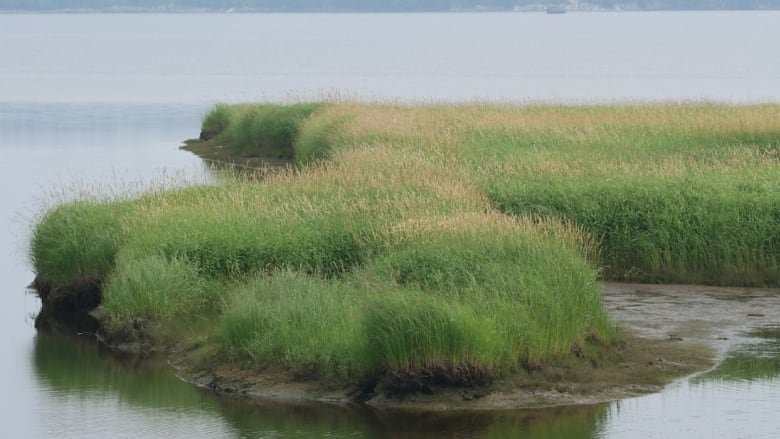
Some rare plants and animals have new invasive species to contend with in Saint John area wetlands, according to research from the Nature Conservancy of Canada. Reed canary grass was found in almost all of the 12 large coastal wetlands studied by the group over the past three summers, said conservation biologist Allison Patrick. As well, a plant called brass buttons, native to southern Africa and New Zealand, was found widespread in Red Head marsh and Musquash estuary.
La Glace Community Water system to receive upgrades
La Glace Community Water System: The $1.3 million project for the La Glace Community Water System will now be proceeding to tender. The tender results will be brought back to council in the future for approval. “Alberta Environment and Parks has confirmed the groundwater source to be high quality, enabling the design, which is 90 per cent complete, to be simplified to reduce redundancies and associated costs,” said the county.
5-day water outage forces evacuations in Manawan First Nation
The Atikamekw community of Manawan, 250 km north of Montreal, is going on day five of a drinking water outage. School is cancelled, the regional health centre is closed, members are unable to bathe or use running water and elders are being evacuated in order to keep an ongoing COVID-19 outbreak at bay. In a press briefing held Monday, Manawan Chief Paul-Emile Ottawa explained the outage – which began on Sunday – could have devastating effects for the community of 2,500 if not rectified quickly.
Campaign pushing for clean "effing water" in Indigenous communities gains steam
A campaign that was launched in December has started to gain steam, and the aim is to make people “give a f*ck” about Indigenous communities that don’t have clean drinking water. The censored version of the campaign is called “It’s Effing Water,” and it was started by social impact agency Public. The campaign suggests that there are nearly 70 Indigenous communities that are still without clean drinking water, and a petition to try and elevate the issue at a national level has gained almost 50,000 signatures.
Companies bidding on North End sewage plant could have to show interest in hiring local, Indigenous workers
Contractors might have to show an interest in hiring under-represented workers from Manitoba's construction industry if they want to get in on the $552 million upgrade to the North End sewage plant. Coun. Brian Mayes (St. Vital) tabled a motion at the city's water and waste committee Wednesday that would require any companies bidding on the project's future tenders to give specific information on plans to hire and train Indigenous workers and people from other under-represented groups in Manitoba.
Evidence of Omicron subvariant BA.2 likely detected in Saskatoon
A toxicology professor at the University of Saskatchewan believes he has found traces of the Omicron BA.2 subvariant, a potentially more-transmissible form of COVID-19, in samples taken in two cities in the province. The Global Institute for Water Security regularly tests wastewater samples in Saskatoon, Prince Albert and North Battleford for evidence of COVID-19 in an attempt to determine whether case numbers are expected to rise or fall. The findings are then handed over to the provincial government and other researchers.
First Nation wants Ottawa to help clean up plastic waste left behind by 27-year boil water advisory
A remote northern Ontario First Nation wants Ottawa to help it find an environmentally responsible way to dispose of the thousands of empty water bottles that have piled up over 27 years under a long-term drinking water advisory. Neskantaga, a fly-in Oji-Cree community with approximately 300 members located about 450 kilometres north of Thunder Bay, Ont., marked a grim milestone on Tuesday — the longest drinking water advisory of any First Nation.
New Sask. potash mine will slash water use, eliminate tailings waste, says CEO
Construction is set to begin this year on a Saskatchewan potash mine with a far smaller environmental footprint than industry norms, according to the company's CEO. "We really believe this is the beginning of a new era of potash production. This will be the way potash is produced in the future," Gensource CEO Mike Ferguson said. The Tugaske potash mine, located roughly 150 kilometres northwest of Regina, will use far less water than others, Ferguson said. A typical mine of this type requires four kilograms of water to produce one kilogram of potash, but Tusaske Tugaske will need only about 1.5 kilograms. This will be accomplished through new technology and more extensive water recycling, he said.
New smart meters in Sudbury will help track water waste, consumption
The new smart water meter system being installed in homes across Greater Sudbury will help customers track water consumption, in real time. Prior to the COVID-19 pandemic, the city embarked on a $17 million project to switch old water meters to smart technology. After several delays, the work continues with more than 80 per cent of customers still to change over.