Newly released wastewater data suggests that the recent decline in COVID-19 transmission in Toronto could be slowing or even plateauing but the city’s top health official says that she still remains cautiously optimistic about the weeks ahead. The data, which was posted to the city’s website on Friday morning, provides the most detailed look yet at the results of a wastewater surveillance project being conducted in collaboration with researchers from Ryerson University and the University of Toronto.
Lansdowne residents warned of sodium in water
A notice was dropped in mailboxes and shared online for residents of Lansdowne recently about elevated sodium levels in the drinking water. The notice from the Leeds, Grenville and Lanark District Health Unit stated that the medical officer of health had instructed them to inform residents of the test results. A sample taken on Jan. 13 revealed the sodium at 58.4 mg/l, and a repeat sample taken on Jan. 18 has shown a sodium level of 70.8 mg/l. Any level of sodium above 20 milligrams per litre must be reported to the medical officer of health, stated the notice.
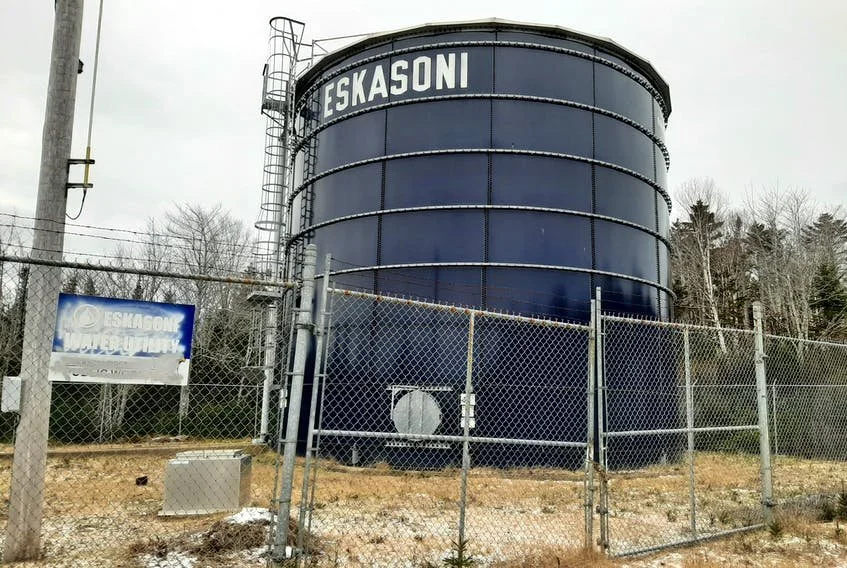
'Blazing a trail': Indigenous-led organization to operate water utility in Mi'kmaw communities this spring
An organization that will take over the responsibility of water supplies in First Nations communities in Mi’kma’ki from the federal government is optimistic the spring budget will bring good news for the chronically underfunded utility. The Atlantic First Nation Water Authority signed a framework agreement with Indigenous Services Canada in 2020 to transition the control and oversight of drinking water and wastewater services in 15 Mi'kmaw and Wolastoqey communities to the First Nations-led organization.
U of S professor believes COVID-19 cases will soon drop in Sask. cities
University of Saskatchewan toxicologist John Giesy says recent wastewater data shows new COVID-19 cases could be dropping sharply in the next few weeks. According to a study released Monday by the Global Institute for Water Security, samples taken from wastewater plants in Saskatoon, North Battleford and Prince Albert showed a decrease in COVID-19 viral load.
Thousands of carcasses of pigs drowned in B.C. floods pose no threat to environment, composting plant says
WARNING: This story contains graphic images of piled-up pig carcasses The Castanet story quoted an Upper Similkameen Indian Band official saying the massive amount of biowaste may contaminate the river and groundwater, something Ocejo says isn't true. The band also sent a letter of complaint to the Town of Princeton on Jan. 11, saying its staff discovered the colossal amount of hog carcasses at the Net Zero Waste facility on Dec.10, and found that leachate and contaminated water were flowing directly from the facility to the Similkameen River's surrounding areas.
Saskatoon residents still cleaning up after sewage water backed up in their homes
Penny Fentiman is one of several Saskatoon homeowners in the middle of a major cleanup after houses in the Montgomery Place neighbourhood were recently hit with a deluge of backed-up wastewater. Sewage water first seeped into Fentiman's home Friday morning and then again shortly before midnight. It's the second time wastewater has flooded her home on the 3400 block of 11th Street in the past five years. The City of Saskatoon said the latest incident was due to a pair of sewer blockages, which forced them to shut off water to homes in the area. The issues have since been resolved and the water turned back on — but Fentiman is concerned it's a Band-Aid solution and that it could be several years before the city implements a long-term solution.
Wetlands can be Canada's good news story in 2022
Over the past year, headlines about the environment have been bleak. Floods, droughts and fires have hit our fellow Canadians hard. But the impacts of climate change should not make us feel powerless. Wetlands are a formidable force of nature that has our back. In 2022, they can be Canada’s good news story. When you look at the ways in which people and communities are working together to conserve wetlands across the country, the good news flows like…well, water. As nations around the globe prepare to mark World Wetlands Day on February 2, Ducks Unlimited Canada (DUC) is celebrating some important wins here at home that are making life better for wildlife, people and communities.
U.S. officials consider plan that would 'send' Nooksack River overflow into Canada
A plan devised by American officials that could lead to the creation of a “floodway” to allow the Nooksack River to spill into Canada during high water has many Abbotsford residents on edge. Paula Harris, river and flood manager for Whatcom County, presented the concept to the Whatcom County Flood Control Zone Advisory Committee earlier this month, asking them to support a request for federal funding to buy out homes in an area between the Nooksack River and the Canadian border as a way to mitigate future flooding.
Neighbours fear possible water contamination after Eastway Tank explosion
A previous statement from the environment ministry stated the frozen ground and efforts by crews "greatly reduced the likelihood of contamination reaching the water table and entering local drinking water wells." However, residents are again raising their concerns after former employees came forward to allege the company dumped wastewater containing fuel into a ditch that runs alongside rail tracks behind the property.
COVID-19 wastewater study shows decrease in Sask. cities
New data from studies at the University of Regina and University of Saskatchewan show evidence of COVID-19 decreasing in several cities. In a study released on Monday by the Global Institute for Water Security at the U of S, viral load in three cities (Saskatoon, Prince Albert and North Battleford) has started to decrease after a sharp rise earlier this month. Another study at the U of R also showed levels were dropping in that city.
USask wastewater testing for COVID-19 sets the standard
Just ask University of Saskatchewan (USask) researchers Drs. Markus Brinkmann (PhD), John Giesy (PhD) and Kerry McPhedran (PhD), who have been analyzing wastewater and stormwater flows in Saskatoon, Prince Albert, North Battleford, and five First Nations communities, to uncover many of those stories. Their findings encompass everything from infectious diseases to biomarkers for such conditions as diabetes and heart disease, to the consumption of recreational drugs in a community. The analyses can even provide information on such things as how much red meat a community consumes or pinpoint a city block where a crack house is located.
Province, Ducks Unlimited create strategies to protect wetlands
With global warming, the B.C. government is looking for ways to protect watersheds. On Tuesday, the province released its Watershed Security Strategy, which includes advice from Ducks Unlimited Canada, and the conservation group calls it an important step. The discussion paper explores key issues including climate change, wildlife habitats, sources of drinking water, as well as community and economic stability. Sarah Nathan, Ducks Unlimited Canada’s manager of provincial operations for B.C., was on hand for the event. She joined George Heyman, Minister of Environment and Climate Change Strategy, at a virtual announcement to discuss the critical role wetlands play in the health and security of watersheds. Referencing the gamut of floods, droughts, wildfires and debris flows that devastated the province this past year, Nathan stressed that protecting and bolstering wetlands is a must.
B.C. securing watersheds for a stronger future Updated on Jan. 25, 2022
Climate change and extreme weather events are strengthening the call for protection and restoration of B.C.’s watersheds to ensure healthy ecosystems support communities with secure access to clean water. The Province is developing B.C.’s first Watershed Security Strategy and Fund. The first step is to explore key themes, including governance, climate change, ecosystems and sources of drinking water, as well as community and economic stability, through the release of a discussion paper for feedback. The Province is developing the strategy with Indigenous Peoples and in collaboration with other levels of government.
Humboldt expands lead water testing program for two years
In the fall of 2021, 45 Humboldt homeowners of century-old properties participated in a city initiative to test for lead – but that doesn’t necessarily mean renters were told. These numbers were discussed at Humboldt council during their regular meeting on Jan. 24, where council voted on expanding the program for a further two-year term testing 622 century-old properties. All affected property owners from the 2021 testing were notified of the results along with information about guidelines, contact information to discuss full replacement of the pipe as well as noting that filters exist to address the issue in the short term. However, the homeowner is not obligated to inform the person living there.
$288M contract awarded for Vancouver water tunnel
Traylor-Aecon General Partnership has been awarded a $288 million contract by Metro Vancouver for the Annacis Water Supply Tunnel, Fraser River Crossing project in B.C. The partnership is a consortium comprised of Aecon (40 per cent) and Traylor Bros Inc. (60 per cent). Aecon Group Inc. announced its share of the contract will be added to its construction segment backlog in the first quarter of 2022.
N.S. protects Colchester watershed after years of municipal, community action
Politicians and locals in the Tatamagouche, N.S., area are celebrating new safeguards for their drinking water. Environment Minister Tim Halman announced Tuesday that the province has designated the French River watershed as a protected water area. The Municipality of the County of Colchester officially asked the province for the designation back in 2020, following growing concerns over mining exploration between Wentworth and Warwick Mountain in the Cobequid Highlands.
British Columbia developing plan to protect drinking water, ecosystems
Severe drought, wildfires, flooding and landslides in British Columbia last year show that responding to climate change requires focusing on water and strengthening natural defences provided by healthy watersheds, an expert says. “We’ve all learned that climate crisis is a water crisis,” said Oliver Brandes, co-director of the University of Victoria’s POLIS Project on Ecological Governance.
COVID-19 in the wastewater: The sewer may hold key to rising cases and outbreaks, University of Guelph tests reveal
When it comes to understanding where the COVID-19 virus might be turning up in high numbers, the answer could be in the water. Wastewater, to be exact. Testing wastewater, as well as monitoring social media, can give an idea of how prevalent the virus is in specific areas. While many parts of Canada are imposing restrictions on testing for the virus, Lawrence Goodridge, a professor of food microbiology at the University of Guelph, is learning how testing water from sewers and water treatment plants can be a valuable tool in tracing the virus.
Rosie Simms helps keep the fresh water flowing
Fresh water is the basis of all life. In Canada, we have often taken water for granted, assuming its abundance. This sense of security is now threatened as more and more communities deal with devastating droughts, floods, fires and contaminated water. At POLIS, our work addresses the root causes of water sustainability problems. We look at how laws, policies, and governance (who makes decisions and how) need to change to ensure our rivers and streams can keep our land and people healthy, provide communities with greater influence over their watersheds, and respect Indigenous legal orders.
Aging infrastructure causing water problems in Behchokǫ̀
A problem with aging infrastructure at the water treatment plant in Edzo, N.W.T. over the weekend has led to brown water — and in some cases, no water — flowing from people's taps, according to Behchokǫ̀ Chief Clifford Daniels. People using Edzo's piped water system were told to start conserving water as of Friday, according to a post on the Tłı̨chǫ Government's website, because the plant was experiencing "technical difficulties."