A University of Saskatchewan (USask) graduate student hopes his doctoral research into issues of water insecurity faced by Indigenous people in Manitoba will lead to positive policy changes. In November, Warrick Baijius defended his PhD thesis on Indigenous water governance, which was co-supervised by Dr. Bob Patrick (PhD), a faculty member in the Department of Geography and Planning in USask’s College of Arts and Science, and Dr. Chris Furgal (PhD), a faculty member in the Department of Indigenous Studies at Trent University.
Feds must protect Albertans from tailing ponds pollution
J. Paul Getty, the famous 20th-century American oil and gas tycoon, once noted: “If you owe the bank $100, that’s your problem. If you owe the bank $100 million, that’s the bank’s problem.” That’s the sort of conundrum facing Albertans right now when it comes to the massive tailings ponds created by the province’s oilsands companies. Those ponds contain approximately 1.4 trillion litres of water, the equivalent of more than 560,000 Olympic-sized swimming pools, and it’s about to come rushing down the Athabasca River — one way or another.
Evacuation order lifted for 400 properties in Abbotsford, B.C., as flood cleanup continues
Hundreds more flood evacuees are being allowed to return home to the Sumas Prairie area of Abbotsford, B.C., as the city continues cleaning up from last month's catastrophic flooding. Mayor Henry Braun announced Wednesday that rapid damage assessments have been completed for houses, barns and garages in the southern Sumas Prairie, allowing officials to lift an evacuation order for 400 properties.
Nevada Sunrise Completes Sale of Water Rights in Clayton Valley, Nevada
Nevada Sunrise Gold Corp. ("Nevada Sunrise", or the "Company") (TSXV: NEV) (OTC: NVSGF) is pleased to announce that it has completed the sale of its water rights in the Clayton Valley, Nevada (the "Transaction") through its wholly-owned Nevada subsidiary company Intor Resources Corporation to Cypress Development Corp. of Vancouver, BC, Canada (TSX-V: CYP) (OTCQB: CYDVF) (Frankfurt: C1Z1) ("Cypress").
Canada invests $3.1 million to protect the Great Lakes and launches new call for proposals
The Great Lakes are essential to the health and well-being of millions of Canadians for safe water supply and the sustainability of our ecosystems. Protecting one of the largest surface freshwater systems in the world is vital, which is why the Government of Canada is collaborating with local partners to find the best ways to keep water safe, clean, and well-managed.
Abbotsford winery urges people not to take items lost in floods, after costly wine barrels disappear
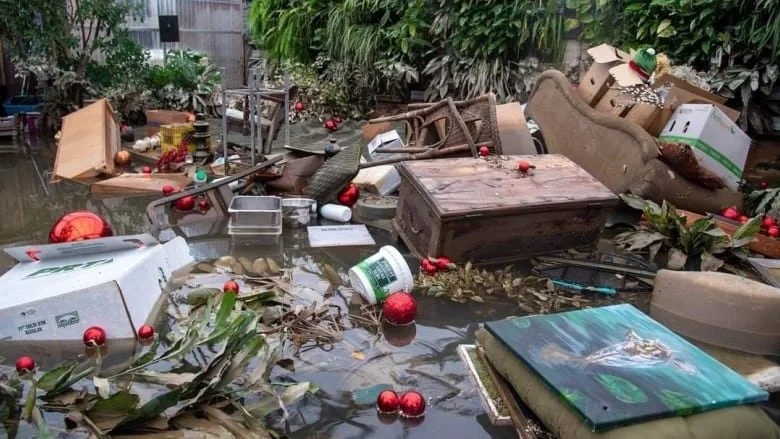
At the height of the floods that ripped through B.C. in late November, Ripples Estate Winery in Abbotsford was under seven feet of water. A greenhouse full of tropical plants, expensive electronic distilling equipment, and most of their stock of wine, vodka, gin and rum were underwater. Blueberry fields were also drenched for nearly two weeks, including heavy machinery like harvesters, bobcats and tractors.
Teetl'it Gwich'in woman named recipient of 2021 Canadian River Heritage Award
A Teetl'it Gwich'in woman in Yukon, who has dedicated much of her life toward protecting and teaching others about the Peel River watershed, has been named the recipient of the 2021 Canadian River Heritage Award. Bobbi Rose Koe was recognized for preserving and promoting Teetl'it Gwich'in traditional ties to the watershed. Koe was given the award also for her "tireless and exemplary work as an organizer, community member, and advocate for youth engagement in river conservation and connection," it says in a news release issued Tuesday.
Environmental groups want data on water contamination in Quebec
Environmental groups are demanding data on water contamination in the vicinity of all Quebec's hydrocarbon wells drilled over the past 20 years. They say they deplore the absence of data on groundwater near wells drilled using hydraulic fracturing, or fracking -- 19 out of 31 in the Saint Lawrence Valley. Their demand comes after analyses that concluded groundwater quality has deteriorated in the Murdochville sector of the Gaspé Peninsula, even years after exploratory drilling.
New research finds evidence of climate-driven changes to northern lakes
Across the Old Crow Flats in the northern Yukon, lakes are telling a story of climate-driven change. The traditional territory of the Vuntut Gwitchin First Nation (VGFN), the Old Crow Flats is recognized as a Ramsar Wetland of International Importance thanks to its more than 8,000 thermokarst lakes (up to 15 square kilometres) and ponds. Thermokarst lakes are formed by thawed permafrost and can be prone to drainage if they expand into low-lying areas. Kevin Turner, an Associate Professor in Brock’s Department of Geography and Tourism Studies and Fulbright Canada Research Chair in Arctic Studies at the University of Washington, has studied the area since 2007, and he says that warmer temperatures, longer summers and more rain are “priming this important landscape for continued climate-driven landscape change.”
Government of Canada announces $200M to address climate change by restoring carbon-rich ecosystems through nature-based solutions
The world is currently experiencing an unprecedented climate and ecological crisis. Climate change is warming our planet and altering the water cycle, resulting in extreme temperatures, flooding, droughts, and wildfires. It's also contributing to the destruction of our planet's rich biodiversity, which negatively impacts our communities and our quality of life, and threatens the livelihoods of Canadians who rely on it. Protecting more nature across Canada directly addresses these challenges.
Experts Say Fossil Fuel Royalty Review Should Include Water
British Columbia should review how hydraulic fracturing companies are allowed to use and pollute water, because the industry’s current access works as a subsidy, according to the Canadian Centre for Policy Alternatives. The government promotes fossil fuel production by allowing fracking companies to pay cheap rates for a publicly owned resource, and by not requiring companies to treat the water they pollute, noted the CCPA in an open letter sent to the province in late November.
Environmental assessment of Northern Pulp's mill restart plan begins
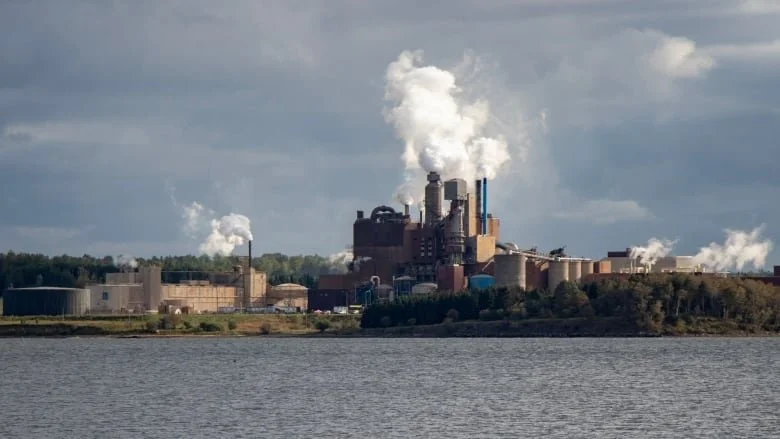
The clock has started on the environmental assessment process for Northern Pulp's proposal to restart its beleaguered pulp and paper mill in Nova Scotia's Pictou County. Last week, the company filed a registration document with the Nova Scotia Department of Environment and Climate Change, and on Tuesday the department formally registered the project. Now begins the process of a Class 2 environmental assessment — the more rigorous of the province's two environmental assessment options.
B.C. flood update: Highway 1 fully re-opens | WorkSafeBC warns flood contractors to watch out for asbestos | Evacuation order lifted for Abbotsford's central Sumas Prairie
A series of atmospheric rivers hit southern B.C. in November, causing evacuations, widespread flooding and mudslides. Watch this file for updates with the latest on the recovery effort. Highway 1 has been fully reopened between Abbotsford and Hope, said the transportation ministry Tuesday. WorkSafeBC is reminding employers and contractors to watch out for hazardous materials during post-flood recovery.
B.C. safety agency issues worker hazard warnings for flooding cleanup
Restoration companies and contractors in British Columbia that are about to help launch a massive flood cleanup and repair effort must be aware of the risks and hazards their work could pose to employees, says the province's worker protection agency. The risks vary depending on the flood and slide damage, but potential hazards include building materials with asbestos, chemical or biological contamination, structural or electrical damage and animal carcasses, said Barry Nakahara, WorkSafeBC's senior prevention services field manager.
Photos show ridiculously large goldfish taking over Canadian harbour after being released into the wild
Have you ever wondered what happens when an unwanted pet goldfish gets released into the wild? It turns out it grows and grows until it becomes a comically large version of its former self. Fisheries and Oceans Canada posted photos to Facebook that show some of the humongous, large-bellied goldfish that were found in Ontario’s Hamilton Harbour.
How to treat E. coli infections that cause kidney failure in children to be studied in Calgary
A University of Calgary researcher will lead a North American study examining a new way to treat E. coli infections that can cause kidney failure in children. The university says the U.S.-based National Institutes of Health is providing more than $11 million for the investigation, meant to stop disease from progressing from bloody diarrhea to kidney shutdown and neurologic complications. The University of Calgary says Alberta has one of the highest rates of STEC infection in the world given its abundance of cattle, sloped terrain, food crops and use of well water.
Surfing Santa hits the water Dec. 23 in Fort Erie
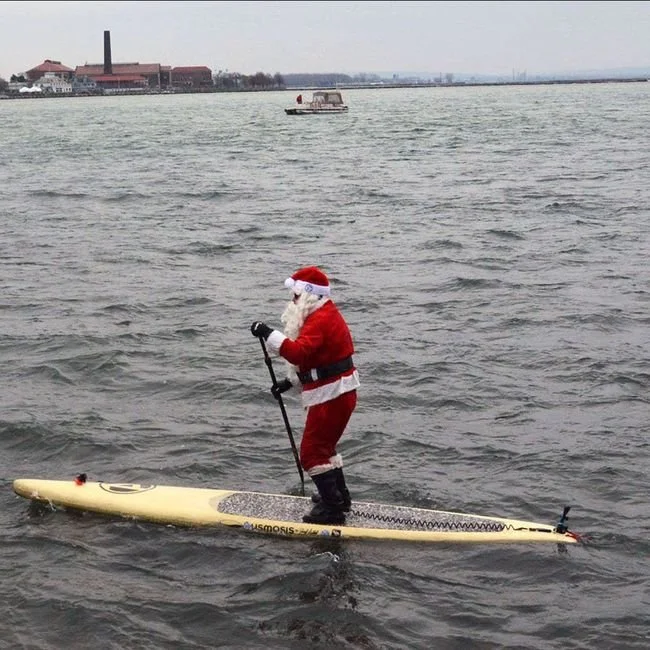
For nearly four decades, Fulton has been entertaining crowds with his yearly windsurfing venture, which he does dressed in full Santa garb. It was never meant to be a big event, but an accident during his inaugural run ended up making headlines around the world. “I was doing a little promotional stunt dressed as Santa when the mainline snapped, so I lost control and drifted across the river,” recalled Fulton. When he was picked up on the other side by border agents, he was asked for his passport, which of course he didn’t have since he never meant to cross the border. The story, that Santa was picked up by border guards and shipped back to Canada, made for good Christmas headline fodder for newspapers, and the legend of Surfing Santa was born.
Military resumes purifying river water in Iqaluit as city searches for solution to plastic bottle waste
Two weeks after a winter storm in Iqaluit took down the tent that housed the Canadian Armed Forces' water purification system, their efforts to provide the city with clean drinking water have resumed. On Monday, the City of Iqaluit announced residents can get purified river water from the military's purification system at Abe Okpik Hall or Elder's Qammaq, but they have to bring their own buckets or jugs — the water depots are no longer providing bottled water.
B.C. moves to recovery management phase after floods; most military leaving province
British Columbia is shifting into repair and recovery mode following devastating floods and landslides caused by record rains that crippled transportation links, deluged agricultural operations and forced the evacuations of thousands of people, says the province's public safety minister. Mike Farnworth said Monday the cleanup and repair work ahead in southern B.C. is massive, but after three weeks of all-out efforts by volunteers, Canadian Forces soldiers and emergency officials to secure dikes, rescue people and animals and salvage properties, the rebuilding job must start.
Risk of drinking-water contamination from manure increased in flooded areas, says province
Provincial health officials are warning owners of private drinking-water wells in flooded sections the Fraser Valley Regional District, and the Metro Vancouver Regional District, that their wells may be at increased risk of contamination. “This is due to potential overflow or failures of liquid-manure storage systems because of high precipitation caused by recent storms,” according to the Dec. 5 news release from Ministry of Health.