The adoption of water treatment technologies has drastically increased as efforts to preserve and protect the planet have risen to all-time highs. In a word, water treatment technologies are crucial when it comes to eliminating contaminants and bacteria from clean, potable water supplies. As such, wastewater treatments are to remove as many contaminants as possible before the rest of the water is sent back into the environment.
The secret ultraviolet colours of sunflowers attract pollinators and preserve water
Finally, we noticed that sunflower populations from drier climates had consistently larger UV bullseyes. One of the known functions of flavonol glycosides is to regulate transpiration. Indeed, we found that ligules with large UV patterns (which contain large amounts of flavonol glycosides) lost water at a much slower rate than ligules with small UV patterns.
’15 years is appalling’: Regina residents renew call for faster lead pipe replacement
A group of concerned residents is hoping a newly-launched petition helps motivate the City of Regina to speed up its lead service connection replacement program. The program currently has a 15-year timeline for completion, while the petition’s organizers would like to see that reduced down to five. “Fifteen years is appalling,” said Regina resident and Get the Lead Out member Florence Stratton, adding the petition already has about 170 signatures.
N.S. mining company handed $250,000 in fines for dumping environmentally harmful substances
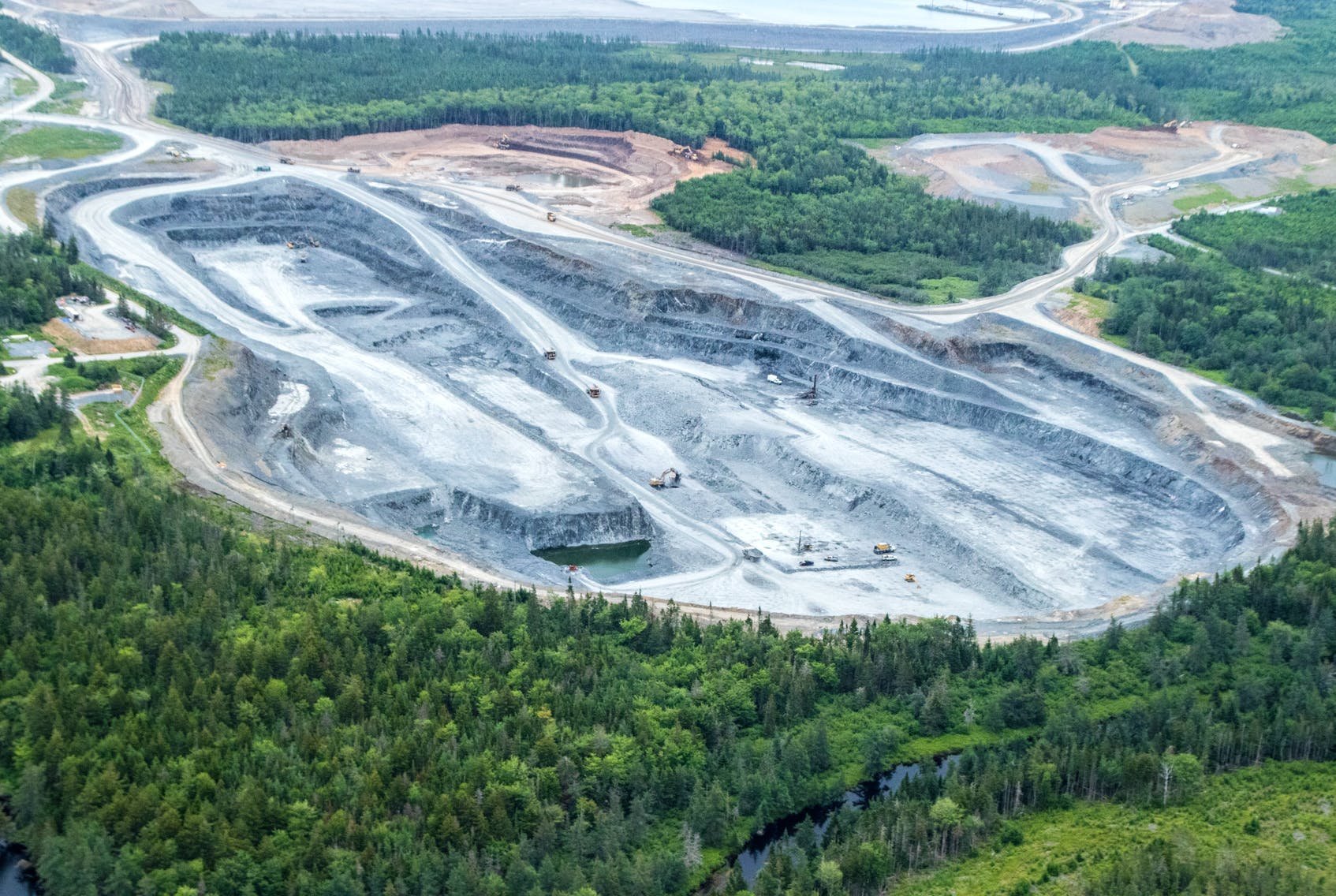
After pleading guilty to releasing harmful substances into bodies of water near its operations, a Nova Scotia mining company has been ordered to pay $250,000 to the provincial and federal governments. Atlantic Mining NS Inc., which operates as Atlantic Gold in the province, pleaded guilty earlier this month to two charges: failing to test the quality of runoff water at its Touquoy open-pit gold mine in Moose River and failing to report those findings to authorities. Initially, 32 environmental infractions were laid against the company, but that number was reduced during the plea process.
EPCOR adjusting water chemistry to mitigate lead
Starting in December 2022, EPCOR will add orthophosphate to its treated water to reduce lead. As EPCOR is Leduc’s water provider, this includes our community’s water supply. Orthophosphate is an odorless, tasteless substance that creates a protective barrier on plumbing surfaces to reduce the release of lead in drinking water from all sources, including lead service lines and plumbing. Many municipalities across North America use orthophosphate. It has no negative health effects, and is endorsed by Alberta Health Services and Alberta Environment and Parks.
Water service restored in Inukjuak after nearly 4 weeks
Water service has been restored in Inukjuak nearly four weeks after the community’s main pipe froze. The frozen pipe had forced the community to get water directly from the river instead of from its water treatment plant. The pipe, which connects the community’s water pump to the distribution facility, froze after a heater broke, said mayor Pauloosie Kasudluak. Municipal and KRG staff had been on the ground since day one working to fix the issue.
Manitoba funds 12 disaster resilience projects
Manitoba is looking to build disaster resilience by supporting a series of municipal projects. The province announced it will contribute more than $186,700 to help fund 12 projects under the Mitigation and Preparedness Program (MPP) to prepare for future natural disasters. “Manitoba is taking a new approach to dealing with natural disasters such as floods and fires by encouraging prevention, rather than recovery,” said Eileen Clarke, municipal relations minister, in a statement. “This provincial support will help municipalities target locally important projects including improving drainage, purchasing new equipment and building up reserve funds for projects that mitigate against natural disasters. This work will build resiliency in their communities and help reduce costs in the long term.”
PVWC examining how to mitigate future drought issues
The Pembina Valley Water Co-op is continuing right where it left off in 2021, forging ahead to enhance the quality of water it provides, and ensure its member municipalities continue to have a secure supply of treated potable water going forward. CEO, Greg Archibald, says 2021 was an extremely busy year for the Co-op. Upgrades were completed at the Stephenfield Lake, including an upgrade to the plant for additional capacity in order to supply water to the Town of Carman as a result of the town shutting down it's water treatment plant and putting in a new reservoir.
Twenty years of mining in Faro, means billions of tax dollars for care and clean-up
Over a quarter of a century after the last rock truck wound its way out of the Faro mine pit, it appears a long-sought route to remediation is underway. On February 15, Canada signed a $108 million contract with Parsons Inc. for construction management and two years of care and maintenance on the Faro mine site. Parsons, one of the largest players in remediation in the world, boasts that their “contract could span over 20 years and exceed $2 billion.”
Opinion: Envisioning climate adaptation through land and water management in 2052
By 2031, after a decade of ever-increasing impacts on society due the rapidly warming climate, it became incumbent upon all levels of government to change how management of the land is managed, which includes water, soils, biodiversity and forests. The next decade was a transition period, as decision-making shifted to local communities rather than distant bureaucrats. The main goals for forestry became carbon sequestration, watershed protection and ecosystem health, rather than lumber and fibre. Forest exploitation ended and there was a social consensus to conserve and expand forests to help mitigate climate change.
Breaking up: ice loss is changing one Anishinaabe fisherman’s relationship with Lake Superior
Respect for water was as much a part of Phillip Solomon’s fishing education as sawing through thick winter ice. The Anishinaabe fisherman can see how rising temperatures are changing Gitchigumi and the fish his community relies on. Sometime in the early 1990s, the ice was so unusually thick and smooth on Gitchigumi that Anishinaabe fisherman Phillip Solomon drove his car, a 1984 Monte Carlo, across the lake from Fort William First Nation to Pie Island with a friend. “There was seven feet of ice,” says Phillip, who everyone calls “Benny.” “There was no snow. We cut the hole, standing in the hole. I was standing in six feet of ice.” By the time he and his friend cut all the way through the ice, there was only a foot of water to fish in, and the two had to set their net somewhere else.
B.C. Climate News Feb. 14 to Feb. 20, 2022: Sea level to rise by 2050 as much as in past century, NOAA says | Study suggests climate change made floods at least twice as likely
Here’s your weekly update with what you need to know about global climate change and the steps B.C. is taking to address the climate and ecological crises for the week of Feb. 14 to Feb. 20, 2022. Study suggests climate change made B.C. floods at least twice as likely. Metro Vancouver talks to climate scientist David Holland in Antarctica. More than half of B.C. residents concerned about climate change, but still prefer gas to cook. Sea level to rise by 2050 as much as in past century, NOAA says
Water and sewage problems strain lives in Edzo as families wait for relief
Kelsey Mantla is still afraid to drink her tap water in Edzo, N.W.T., where water and sewer failures have been plaguing residents for weeks. Brown water has poured from the taps and underground pipes have burst, forcing some community members to rely on neighbours and family for basic sanitation. "We couldn't use the bathroom or anything. My kids would cry and the house stunk," said Mantla, whose house was flooded by a backed-up sewer. On Jan. 21, a water pump failed in the 200-person Tłı̨chǫ community of Edzo and many buried lines burst, taking out some residents' water for a month. Mantla lives in one of about 50 homes that had no water, or brown water, as a result.
Hydro One teams in clean up mode after oil spill leaks into the Don River
Cleanup crews from Hydro One are continuing their work at the Don River on Saturday after an oil spill from one of its transmission sites leaked into the river a day earlier. Nancy Clark, a spokesperson for Hydro One, said one of the company's transformers at the Bathurst Transmission Station in North York failed early Friday, resulting in insulating mineral oil being released.
Water-softening pilot considered
The District of 100 Mile House is taking steps towards softening its water supply. Council voted unanimously last week to approve a grant application through the Investing in Canada Infrastructure Program for a pilot bulk softening project, expected to cost about $300,000. Council also voted to commit to the district’s share of the pilot cost, anticipated to be around $75,000.
Rare trout pulled from city lake means cleanup efforts working, scientist says
An angler's surprise catch may indicate a decades-long cleanup effort in Sudbury has been successful. On February 4, Andrew Shea pulled a 3.4 kilogram mature female trout from Nepahwin Lake. The 128-hectare body of water is wedged between Paris Street, a busy, four-lane thoroughfare, a private golf course, and a heavily-densified residential neighborhood– not prime habitat for the highly-sensitive lake trout.
New IJC report seeks tools to maintain safe Lake Ontario water levels
A new report has been released by the International Joint Commission (IJC) for public review as part of the ongoing debate over Plan 2014, a controversial regulation plan to manage water levels on Lake Ontario. The phase-one report, the first of two to be released later, makes six recommendations on the road to helping better prepare for crisis high-water levels along Lake Ontario shorelines that wreaked havoc in 2017, 2019 and in early 2020.
Southern Manitoba faces risk of major spring flooding along Red River and its tributaries
As southern Manitoba remains enveloped in freezing temperatures and seemingly endless snow flurries, there's another "F" word that keeps coming to mind — flooding. The province's Hydrologic Forecast Centre released its first flood outlook for the season on Friday and is predicting major flows along the Red River and its tributaries, including the Roseau, Rat and Pembina rivers.
Turning waste PPE into water and vinegar
A process to convert PPE waste into harmless byproducts is a potential gamechanger to the problem of PPE waste filling landfills and polluting oceans and rivers. Shredded masks, gowns, gloves and plastic safety glasses go into a machine; hot, pressurised water and compressed air are applied; water and acetic acid are the end-products. The PPE-to-liquid process is carried out at a temperature of 300°C and takes about an hour in a small prototype machine in a laboratory in the faculty. Gaseous by-products from the process are oxygen and low concentrations of carbon dioxide which can be safely discharged. “This is a clean, chemical-free solution which will be a game changer internationally,” says Dr Saied Baroutian, an associate professor in the faculty’s Department of Chemical and Materials Engineering.
Pilot project will improve water quality testing in northern Manitoba: province
The province of Manitoba says it hopes to improve access to timely testing of water quality samples in northern Manitoba through a pilot program announced Thursday. A bacteriological water testing in site in Thompson is expected to reduce delays and uncertainties associated with shipping water samples from the northern Indigenous communities of Pikwitonei, Thicket Portage and Nelson House, according to a provincial news release.