The extreme climate impacts experienced in B.C. in 2021 are ushering in new mainstream vocabulary as more and more people grapple with the enormity of the consequences taking place. Heat domes. Atmospheric rivers. Ecosystem resilience. Watershed security. Climate anxiety. All recent additions to our everyday lexicon. Climate change has swiftly become the climate crisis, as the catastrophic flooding and landslides in recent weeks have shown, preceded by the record heat waves, drought and fires of the summer.
Feds moving to ban plastic straws, bags by end of 2022: Guilbeault
It's the end of days for plastic grocery bags and Styrofoam takeout containers in Canada, but the products can still be manufactured for export. Environment Minister Steven Guilbeault published draft regulations Tuesday outlining how Canada will ban the manufacture, sale and import of these items, along with plastic cutlery, stir sticks, straws and six-pack rings, by the end of next year.
IN PHOTOS: 12 notable Canadian stories in 2021
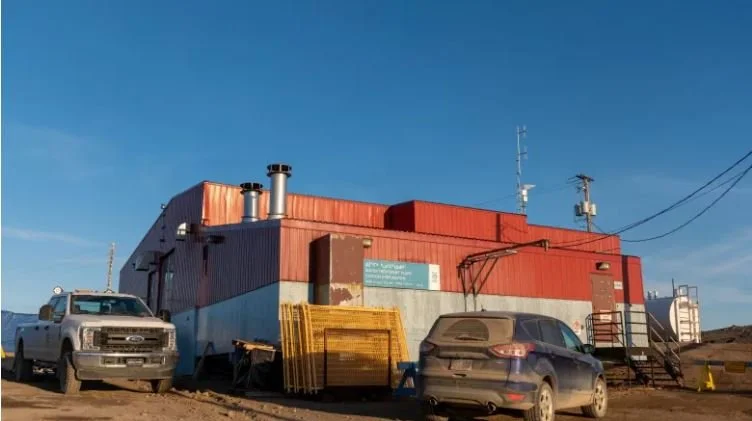
On Oct. 12, due to concerns about fuel contamination, Iqaluit issued a do-not-consume order for its tap water that lasted nearly two months. The city of 8,000 would eventually point to an underground fuel spill as the potential cause of the contamination. After learning that the city's water was not safe to drink, residents in Iqaluit collected water from the nearby Sylvia Grinnell River. The military was dispatched to help provide treated water from the river using mobile water treatment units.
USask researcher’s cutting-edge buoy aims to secure water source for Regina and Moose Jaw
The independent board of directors of the plant, owned by the cities of Regina and Moose Jaw, in collaboration with plant president and CEO Ryan Johnson, has approved the purchase of a custom-designed $250,000 high-tech buoy that’s been nicknamed Superbuoy. It comes equipped with research-grade weather and atmospheric monitors, and an array of winter-hardy water quality sensors for year-round use.
The Water Security Agency Offering Free Workshops, Helping Farmers Plan Agricultural Drainage Projects in a Changing Climate
The Water Security Agency (WSA), with the support of Natural Resources Canada, is offering free online workshops called AgH2Onward to introduce farmers and ranchers to the Agricultural Water Management program in Saskatchewan, the process and benefits of drainage approvals, and innovative techniques to best manage water on their land. The free workshops are being offered until April 2022 and include two half-day sessions.
Boil water advisory for Abbotsford’s Sumas Prairie rescinded
he boil water advisory for much of Sumas Prairie has been rescinded. The city of Abbotsford made the announcement on Monday (Dec. 20). The notice applies to the following areas: Angus Campbell Roadd to the west, Highway 1 to the north, Chilliwack/Abbotsford border to the east, Canada/US Border and Old Yale Rd to the south. According to the city of Abbotsford, consecutive sampling results show that the water in the Sumas Prairie system meets regulatory water quality requirements and normal water usage can be resumed.
Lake Ontario saw third highest rise in water levels in October
Unusually high levels of rainfall in the autumn led to the third wettest fall on record which created higher levels in Lake Ontario water levels, said joint U.S.-Canada regulators governing water levels. The International Lake Ontario-St. Lawrence River Board said in a statement, “Lake Ontario is currently 34 cm (13.4 inches) above the long-term average (1918-2020) and 34 cm (13.4 inches) below the record high set in 1945 for this time of the year. “In terms of total water supply to Lake Ontario, September through November 2021 was the third wettest fall on record. As a result, Lake Ontario experienced the third largest rise in water levels in October. The lake rose 8 cm (3.1 inches) as opposed to decreasing an average of 11 cm (4.3 inches) typically experienced that time of year.”
Nunavut's former deputy chief public health officer spills details on Iqaluit's water crisis
Nunavut's former deputy chief public health officer says she flagged concerns to the City of Iqaluit about whether tests at the city's water facilities were done properly in early October when strange, fuel-like smells were coming from the taps. In an interview with CBC News, Dr. Anne Huang, who is no longer in the role, said that "It definitely was challenging to receive information that first week." Initially, she said the city "had no idea who I was." In the days that followed, her fears were realized when she found that initial water samples sent to an Ottawa lab had not been collected correctly.
Returning home to the rez was the best decision I ever made
For one thing, the majority of homes do not have drinkable running water at Six Nations. Yes, we did get a water treatment plant and yes, it's operational but hooking your house up if you're currently not on the system costs anywhere between $8,000-$10,000 depending on how far your house is from the water main. At the old farm house, we have a cistern that gets filled once a month as we do all the cleaning and bathing with trucked-in water. Rez connections are such that I text one of my cousins and he brings it on demand. Once a week, we fill two 22-litre water jugs for drinking water at a water supplier on Chiefswood Road (also another cousin).
Canada supports community-based action on freshwater protection through the EcoAction Program
Clean, fresh water is essential to the health, safety, and well-being of our communities. The Government of Canada is committed to finding nature-based solutions to keep water safe, clean, and well-managed for future generations. Today, the Honourable Steven Guilbeault, Minister of Environment and Climate Change, announced close to $4 million in funding to support fifty-two new projects over the next four years under the EcoAction Community Funding Program.
Private member’s bill tabled by Okanagan MP highlights water protection shortfalls
A private member’s bill tabled on Tuesday seeks to draw attention to what one Member of Parliament says are insufficient environmental protections for Canada’s lakes and rivers. On Dec. 14, NDP MP Richard Cannings introduced Bill C-214, which would amend the Canadian Navigable Waters Act. The bill aims to add more than a dozen lakes, rivers and creeks in his B.C. riding of South Okanagan-West Kootenay to the law’s list of protected waters in an attempt to regain safeguards that were lost in the Harper-era rollback of environmental protections and never fully reinstated under the current Liberal government.
Military assistance for flood-ravaged B.C. ends, focus now on housing and recovery
The mayor of a British Columbia community devastated by last month's floods says finding winter housing for displaced residents is his top priority with recovery efforts underway. Princeton Mayor Spencer Coyne said about 300 people from the area are still on evacuation order and about one third of them will need accommodation. "We want to keep people in the community," he said. "If we move people out of the community, they're not going to be able to work and that's going to add another layer of stress and obstacles to overcome."
Tap intentionally left running in Winnipeg city hall washroom for over a year as employees work from home
A tap in the basement of Winnipeg City Hall has been deliberately left running for nearly as long as the COVID-19 pandemic has lasted in Manitoba. Coun. Shawn Nason (Transcona) raised the issue of the flowing faucet at Thursday's council meeting, saying it has poured the equivalent of three Olympic-sized swimming pools down the drain. "If a 50-year-old building requires taps to be on 24 hours a day, we have some serious issues," Nason told reporters after the city council meeting.
Iqalummiut get a break on November water bills
Iqalummiut will not have to pay their water bills for the month of November as city councillors voted in favour of providing a 100 per cent rebate due to the water emergency. The move will cost the City of Iqaluit approximately $1.7 million, money council hopes the Government of Nunavut will cover. The Government of Nunavut had imposed a do-not-consume water advisory from Oct. 12 to Dec. 10 due to fuel contamination in the city’s water supply.
Prime minister tells cabinet ministers to concentrate on COVID-19, UNDRIP, clean water and justice
But he says the pandemic cannot throw everything off course and the letters highlight the need to fight the “existential threat” of climate change and ensure a future where all Canadians have “a real and fair chance at success.” Patty Hajdu, minister of Indigenous Services Canada, already has a number of massive files on her desk, including revamping First Nations child welfare, continuing to build clean water infrastructure in First Nations communities and to “support First Nations-led processes to transition away from the Indian Act.
Cars, couches, fridges and fuel tanks among 'mountains' of flood debris requiring disposal
Unprecedented flooding in southwest British Columbia last month has left hard-hit communities dealing with the disposal of debris like drywall, insulation, silt-soaked mattresses, couches and kitchen cupboards damaged by water that gutted homes and businesses. Abbotsford Mayor Henry Braun said a second waste transfer station is expected to open for "mountains" of trash left outside homes after record rainfall killed thousands of livestock and devastated a prime agricultural area of the province.
NWMO wrapping up drilling, starting water testing near Ignace, Ont.
Concerns about groundwater near a proposed site for a nuclear waste repository are top of mind for many who have worries about the Nuclear Waste Management Organization's (NWMO) plan near Ignace, Ont. The NWMO wrapped up the drilling of its sixth borehole earlier this month, but work on figuring out how water flows to and from the area will continue. CBC News recently travelled to Ignace and Dryden, to hear about the public's perception of the project. One theme emerged, with many people concerned about water.
City recreation staff no longer assigned to water emergency
The City of Iqaluit’s recreation staff are back at the Iqaluit Aquatic Centre and the gym is open after they were reassigned on Dec. 1 to help with the water emergency. It remains unclear when the city will make other moves to return to normalcy, following a water emergency that lasted nearly two months, caused by the discovery of diesel fuel in the city’s water system. During that time, Iqalummiut were under a do-not-consume water advisory due to fuel contamination. On Dec. 10, the Government of Nunavut lifted that advisory.
Rusty tap water not a health concern, city says
Some Ottawa residents may find discoloured tap water and a drop in pressure today due to work on Stage 2 LRT, but the city says it's not a health risk. The change in pressure is due to the decommissioning of the Cleary Avenue watermain, which has been taken out of service while crews work on the Stage 2 light rail tunnel. The issue affects some people living in College, Knoxdale-Merivale and River wards, the city said in a Wednesday afternoon statement.
Marineland Canada says site for planned whale refuge in Nova Scotia is too polluted
A plan in Nova Scotia to build North America's first coastal refuge for whales formerly kept in marine parks has come under fire from Marineland Canada. The marine park in Niagara Falls, Ont. — the only venue in Canada that has captive whales — released a study this week alleging the proposed site for the Whale Sanctuary Project is too polluted. Citing provincial studies, Marineland said the site in a bay near Port Hilford, N.S., has been contaminated by two toxic tailings dumps left behind by gold mines that operated between 1860 and 1939 in the historic Wine Harbour Gold District.